Jamie's Reserves Diary - March 23rd to 27th

Jamie's Reserves Diary - March 23rd to 27th

Photo by Jamie Proud

A weekly roundup of being a Bedfordshire Reserves Officer, with volunteer tasks and why we do what we do.

Hi all!

Sorry this one is a bit late, had a week off and it’s thrown my schedule out!

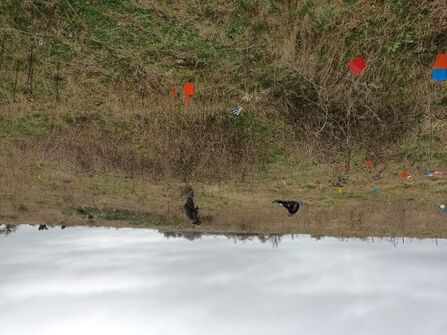
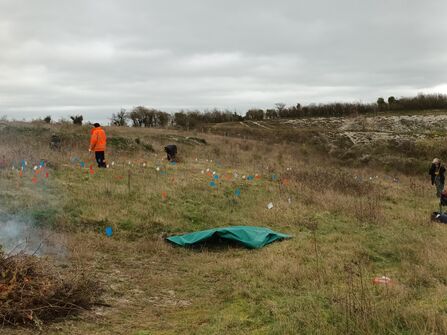
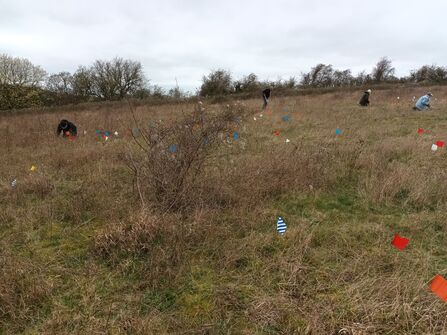
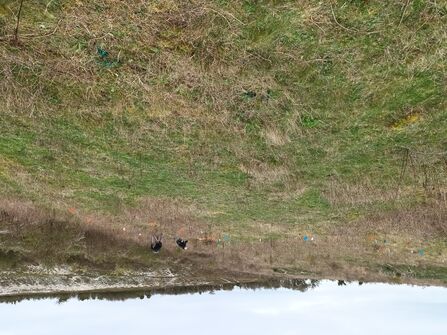
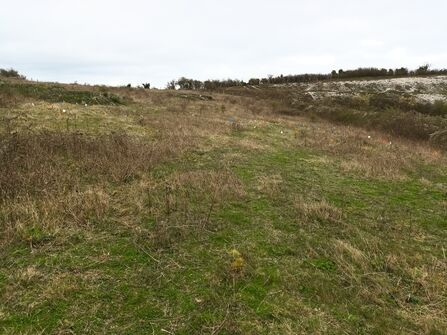
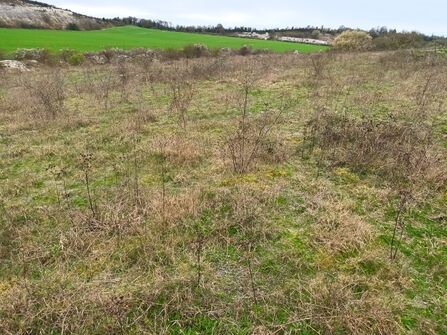
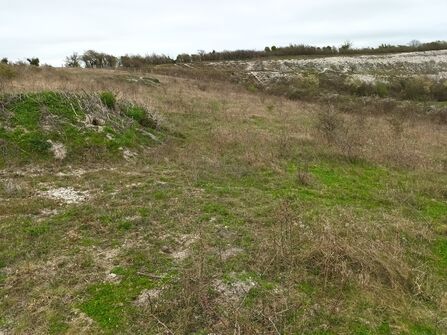
I had Monday 23rd off, but on Tuesday we had a last scrub task at Totternhoe Quarry for the season.  We were working in Spot’s Field, in the north-east of the site.  This field was bought BCN around 2010 from the neighbouring farmer, so was formerly arable farmland.  The farm field itself is actually the remains of the original Totternhoe Quarry that the site is named after, which explains the steep chalk banks on its edges.  Spot’s Field is currently the site of an experiment the Wildlife Trusts BCN has been running.  We created four letter “E” shaped banks in the field, each one facing a different direction.  These banks create micro-climates that benefit different wildflowers and insects, and are primarily intended to benefit butterflies.  We monitor the banks to determine which orientations provide the most benefits. 

We’d like to graze the field but scrub has started popping up, and as most of it is thorny it will catch in the sheep’s wool and be an issue for them.  Although we’re into the start of bird breeding season, this field is a good choice to work in as the scrub is small and spread out, making it easy to tell there are no nests.  Thicker areas of bramble and the larger scrub at the arable field edge were left alone to avoid the risk of any nest disturbance.  There was a bitter wind blowing, but the volunteers cracked on and cleared about a quarter of the field.  As always, they marked the cut stems so we can treat them and prevent the scrub from regrowing.  Fiddly work like this can be unsatisfying, but it will benefit the sheep and grassland diversity in the long run.  Grazing the field will help to control the grasses, which in turn allows a greater diversity of wildflowers.
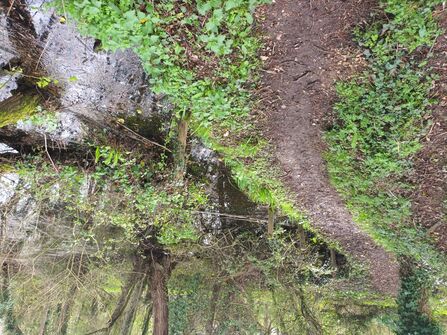
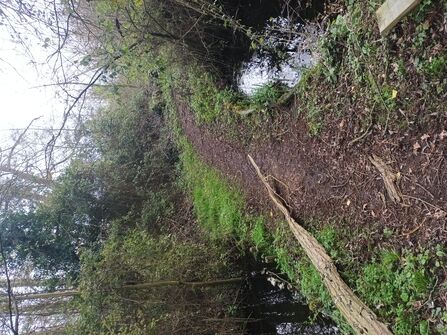
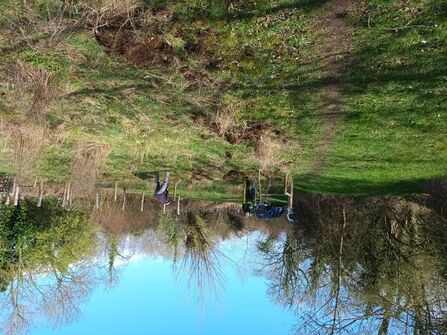
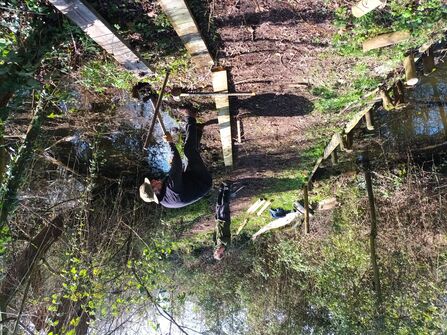
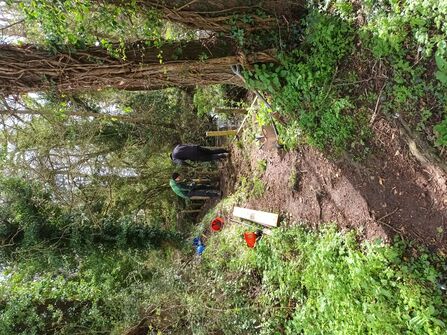
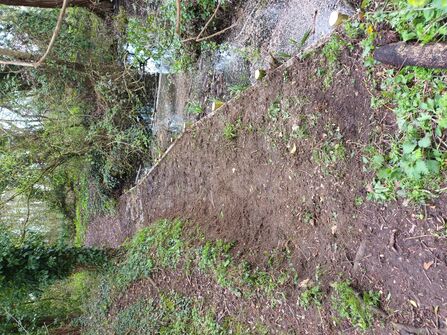
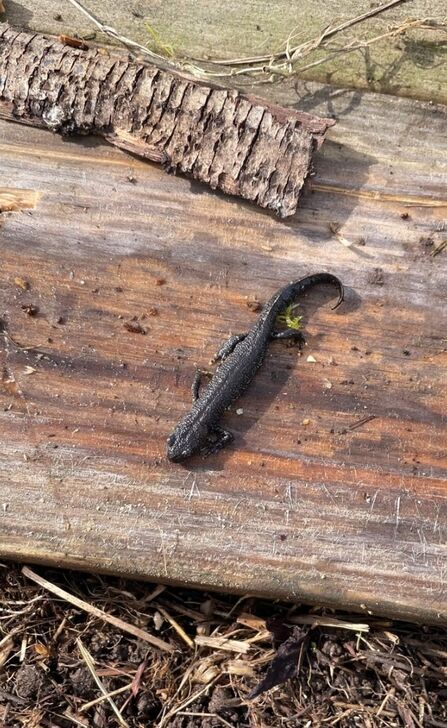
On Wednesday we again had simultaneous tasks at Pegsdon Hills and Felmersham Gravel Pits.  I assisted RO Chantelle and Site Warden Cliff with path works at Felmersham, while Senior RO Richard and Volunteer RO Ed had a last scrub task at Pegsdon.  Some of the paths at Felmersham are right on the water’s edge and are slowly eroding.  Wooden boards or old branches, supported by posts, were installed along the edges to reinforce the paths, but over the years these have rotted out.  Our task for the day was to replace the boards with ones reclaimed from the old cattle coral, and to replace any support posts with ones from the cattle pen, which are to be replaced with metal posts anyway.  So, a few volunteers worked on digging out the old posts while others removed the nails from the coral rails, and the rest of us worked on replacing the edge boards and posts.  We had some strange weather, with sun, rain, hail, and snow!  Despite the conditions, the volunteers were able to remove all the cattle pen posts, and we replaced the path edging on four sections of path. Warden Cliff also took the time to dig out the path edges where the paths had narrowed next to soil banks.  While removing nails from the boards, volunteer Trevor found a great crested newt, which promptly relocated itself into the grassland!

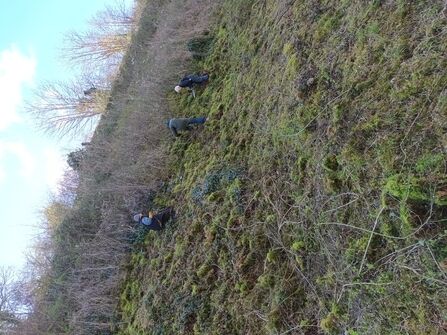
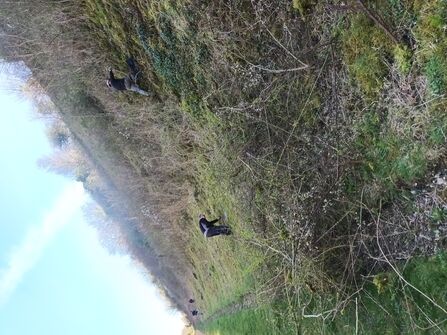
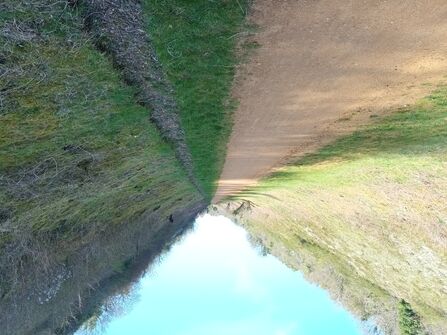
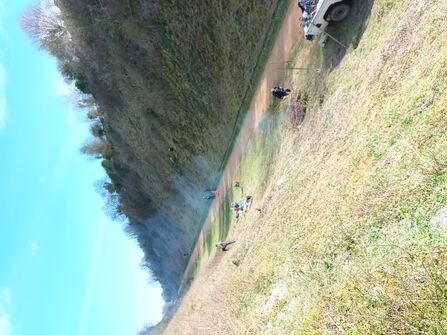
Thursday's weather was a complete change, with clear sunny skies!  SRO Andy was running a scrub task at Sewell Cutting, which we manage on behalf of Central Beds Council.  The cutting was dug for the London North West Railway line which ran passenger trains linking Dunstable and Leighton Buzzard from 1848 to 1965.  Since then, the tracks have been removed and it’s now a popular walking and cycling route.  The steep banks are north and south facing and have developed different habitats.  The south facing side receives the sun and is full of wildflowers, and the north facing side is usually in the shade and was mostly grassland.  Invasive dogwood, cotoneaster, and scrub are taking over, and the north facing side is losing its grassland to scrub and moss.  The banks are so steep they’re difficult to work on, but our spry volunteers are as nimble as mountain goats and cracked on regardless.  Most of the volunteers worked high on the banks, while volunteer Anne and VRO Ed brushcut the flatter bottoms of the slopes.  The cutting has an impressive number of butterflies in summer, and the works here will help keep it that way.

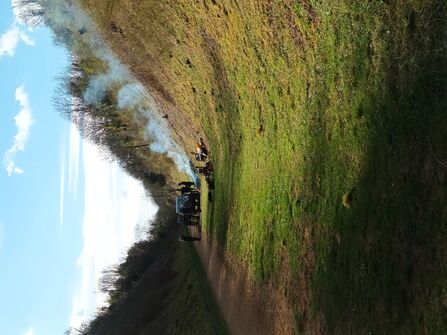
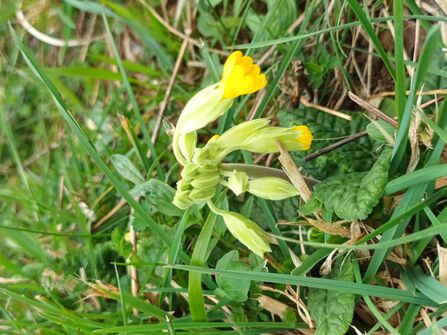
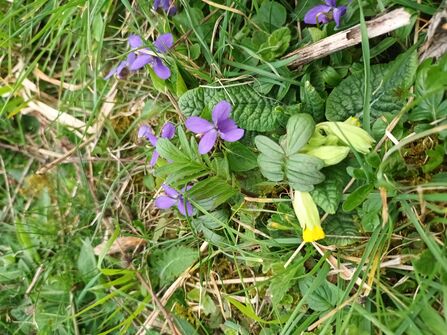
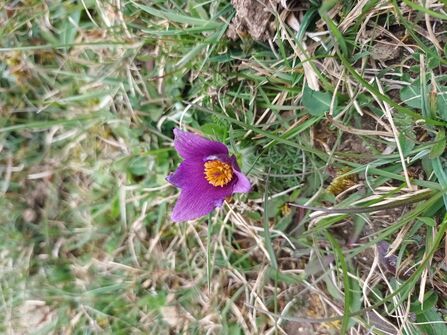
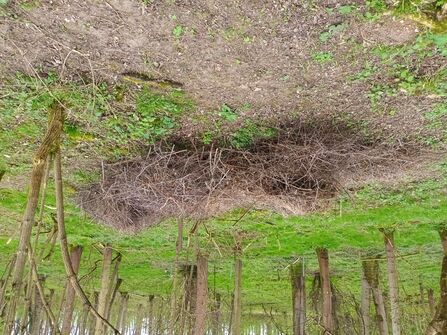
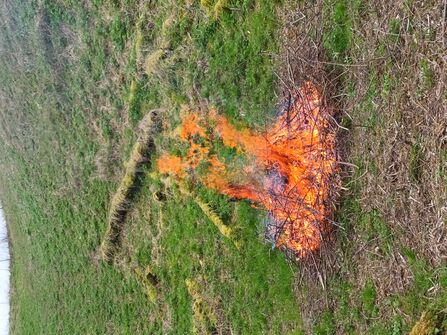
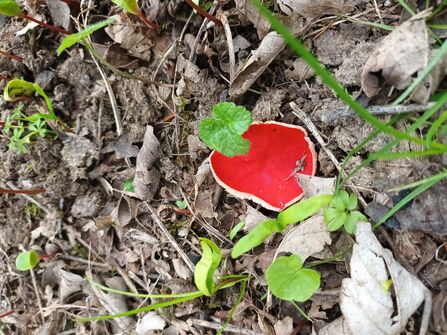
Friday is often a chance to catch up on paperwork and plan out the following weeks tasks, but we had some catch-up work to do, so I headed off to one of the non-public sites we help to manage. We’d previously had a scrub task here, but hadn’t managed to burn all the arisings, so I had a reconnoitre of the grassland to see what flowers were up, which included pasqueflowers, and then headed down to the fire site to deal with the remaining brash.  As there is a risk of nesting birds, I approached the brash pile slowly to see if any birds came out or were disturbed by me, then gave it a gentle shake. Nothing came out and no birds gave alarm calls, so I carefully dismantled the pile, just in case, and had my own private bonfire.  While waiting for the fire to die down I mapped a newly installed fence line for our digital maps and found a large scarlet elfcup!

If you'd like to support our work, please consider becoming a Member.  If you'd like to join our merry volunteers, you can click here to apply.

As always, thank you to our volunteers for all their hard work.

Yours,

            Jamie