Jamie's Reserves Diary - April 20th to 24th

Jamie's Reserves Diary - April 20th to 24th

By Jamie Proud

A weekly roundup of being a Bedfordshire Reserves Officer, with volunteer tasks and why we do what we do.

Hi all!

Unfortunately I've fallen behind with my weekly blogs.  In order to catch up I'm going to have to skip a week, sorry!

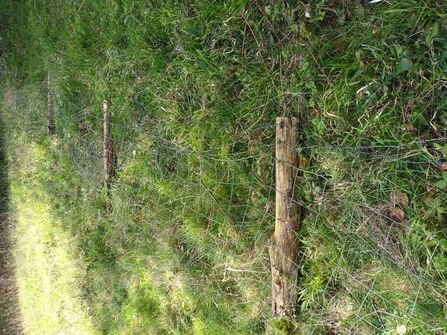
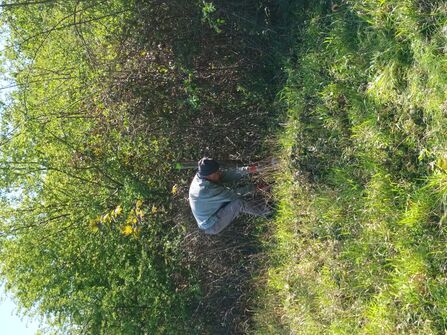
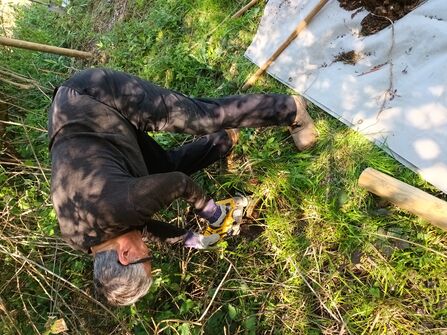
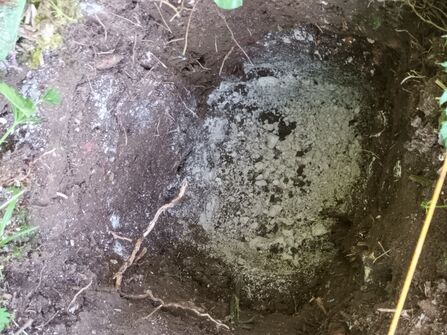
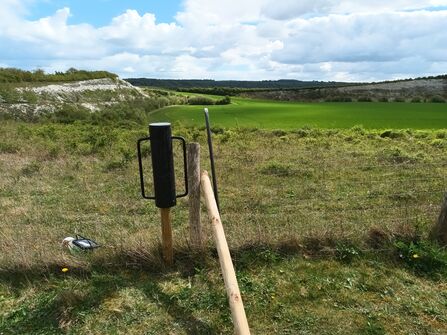
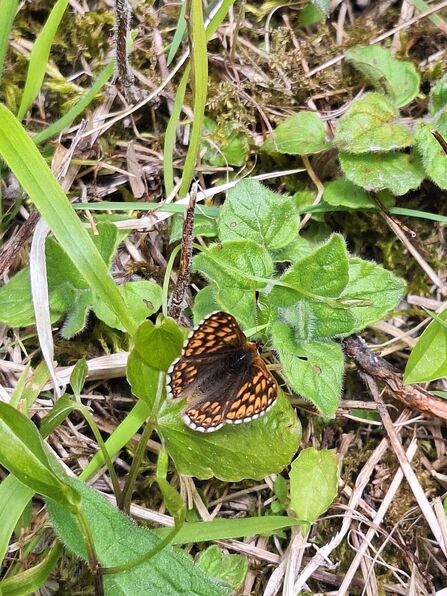
On Monday 20th I loaded up fence posts for a Wednesday task in Triangle Field at Totternhoe Quarry, and dropped them off.  Having never had to put posts into the ground at Totternhoe, I tried putting one in to see how it would go.  The top soil is quite shallow and full of debris in Triangle Field, so it was hard going, and I had to chip chalk out of the bottom of the hole to get the post in deep enough.  At least I knew what the vols and I would be facing on Wednesday.  Seeing as I had posts and tools with me, I headed over to Spot's Field, which has our butterfly bank project in it, to replace two posts there.  There is over a foot of clay along this bit of fence, so I was able to hand knock the posts in and cross that repair of my list.  While I was there, I went to see if Duke of Burgundy Butterfly were coming out and was lucky enough to spot two of them.  A lot of the scrub management at Totternhoe is specifically to provide breeding habitat for Dukes, which were classed as endangered in 2010, but lowered to vulnerable in 2022 due to conservation work such as at Totternhoe Quarry.
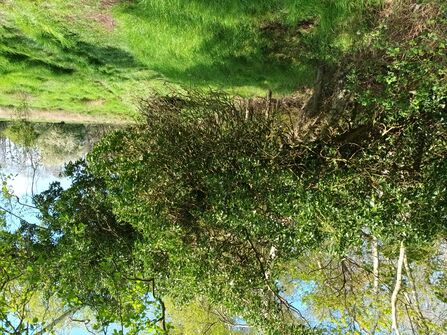
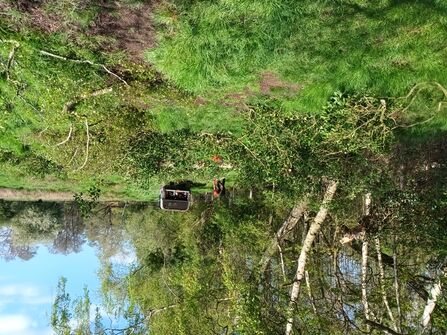
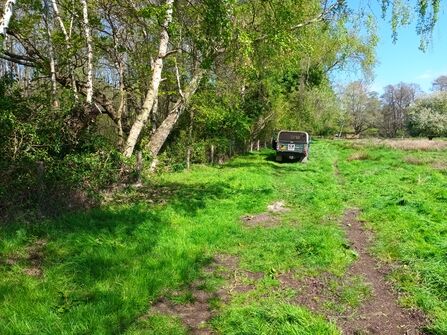
I had an annual health check booked for Tuesday afternoon, so the morning was spent out with VRO Ed at Flitwick Moor, clearing fallen trees.  Flitwick Moor is a SSSI site of wet woodland and fen.  Unfortunately, the wet ground can mean trees fall over quite regularly here, and when they block paths or fall on fences, we have to deal with them.  A trail through the woodland had a number of trees down over it, so VRO Ed and I were tasked with cutting the paths open.  I forgot to to take any pics most of the day...  The last jobs here were to take down 2-3 trees that were slowly collapsing onto fences.  One was quite big and covered in ivy.  The trees had previously been surveyed for nesting birds, but nothing had been seen using them.  Before I started work I inspected the tree again and gave it a shake to ensure it was still unoccupied.  Happy that we wouldn't be disturbing anything, we chopped it up and stacked it over the fence out of the way.  Once all the trees were dealt with, VRO Ed joined SRO Andy's task in another part of Flitwick Moor, and I went to my appointment.

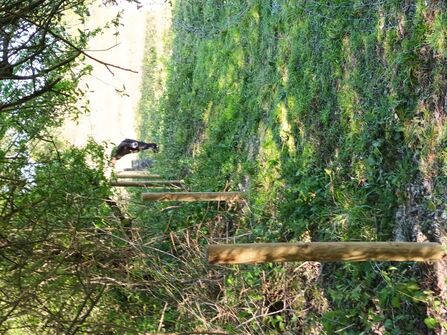
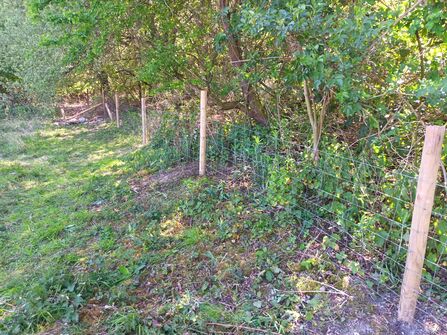
Wednesday was the fencing task in Triangle Field at Totternhoe Quarry.  Fencing work isn't for everyone, and can be quite physically demanding, so not all the usual volunteers come to fencing tasks.  Luckily we have some very hardcore volunteers who seem to relish the challenge!  With a task the day before, and some volunteers also having annual health checks that day, I was glad when two volunteers arrived.  Volunteer Ian started removing the old posts from the netting, while volunteer Dave and myself started putting new posts and struts in.  We quickly hit hard chalk at the bottom of the holes, and it took quite some effort to chip it out to get the holes deep enough for the posts.  Thankfully SRO Andy arrived at lunch time to give us a hand.  By the end of the day we'd completed repairs on one stretch of fence, and started preparing the next section for a Tuesday task the next week.
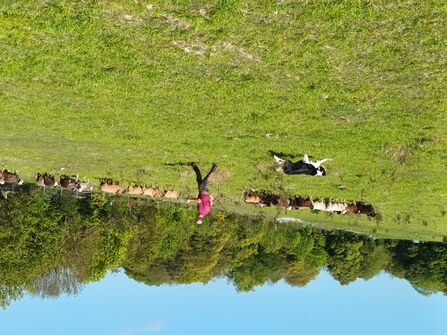
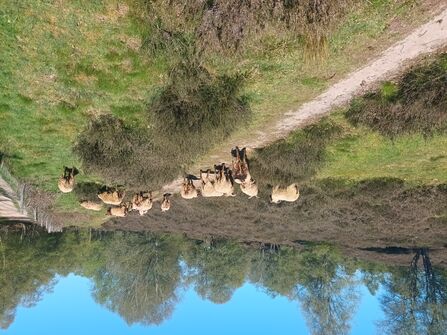
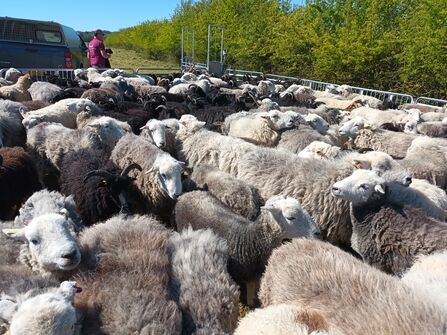
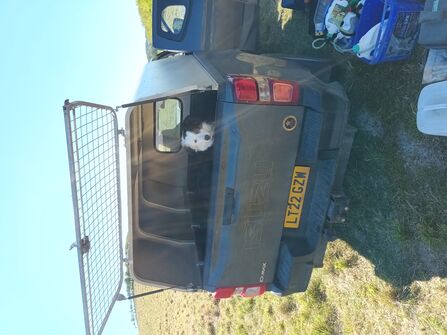
Part of my role is to assist SRO Rich with livestock management, so on Thursday I was helping him round up sheep that we were lending The Greensand Trust to graze on Rammamere Heath, near Leighton Buzzard.  Special Grazing Officer (SGO) Hope (our sheepdog) was very effective in using her highly trained human, Rich, to round up the sheep.  Once penned, we were able to sort out the sheep we wanted, scan them, and then load them into the livestock trailer.  Once over to Rammamere they were very interested in all the new things they could eat!

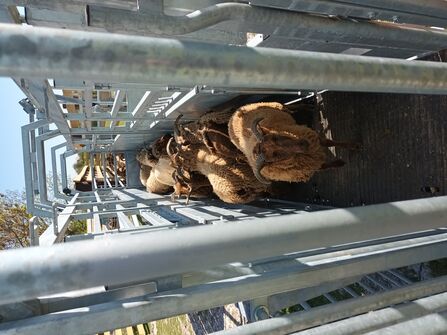
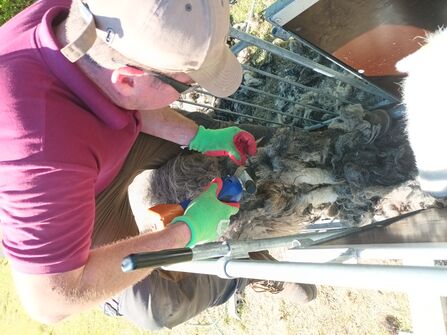
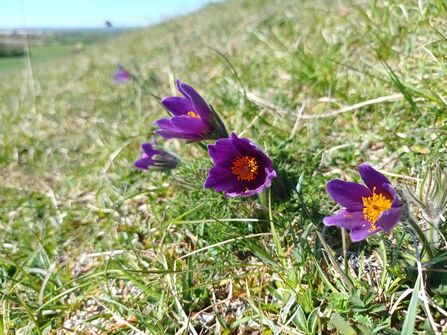
Sheep can suffer from a number of health problems, and their welfare is a top concern here at The Wildlife Trusts.  SRO Rich had noticed that flies were showing too much interest in the sheep's rear ends.  Blow fly maggots eat living tissue and the flies will lay their eggs on a sheep's bum, attracted by any sheep poo stuck in the wool there, so Rich had made a start on shaving the sheep's bums to keep them clean (called dagging, or crutching), and giving the sheep a fly treatment to protect them.  So on Friday I helped SRO Rich and SGO Hope round up 147 sheep for dagging and treatment.  It took a few tries to get that many sheep into the penned area, but after that it was quite straight forward.  We'd push three sheep into the sheep race, check to see if they'd already been dagged, scan their tags, and Rich would then dag and treat any that needed it.  We managed to get all 147 sheep checked and dagged by the end of the day!  I even had a bit of time left to go over to a nearby Natural England site to check out the pasqueflowers that were in bloom.

If you'd like to support our work, please consider becoming a Member.  If you'd like to join our merry volunteers, you can click here to apply.

As always, thank you to our volunteers for all their hard work.

Yours,

            Jamie