
Hi all!
Not a lot to report this week. Monday was a bank holiday, so again I was off. On Tuesday afternoon I had a personal appointment in Cambridge, so I just did my task planning and paperwork at the BCN head office in Cambourne in the morning.
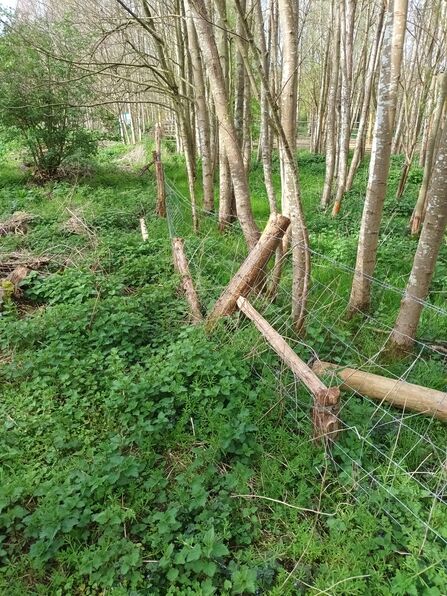
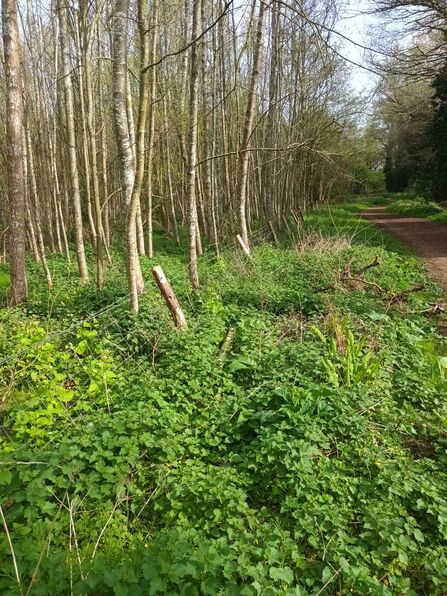
The second Wednesday of the month is the Beds Monthly Team Meeting, where we catch up with what's going on, and start planning the following months tasks. After the meeting I headed off to Flitwick Moor to have a look at the fence line on the outer edge of a woodland field we call Lady Lucas Land. VRO Ed had previously surveyed the fences at Flitwick Moor, so we knew there was a lot of work to do, but I was scouting out how much was on this specific section in order to plan the Thursday fencing task here. I marked up 55 intermediate posts and two large turning posts to replace along the riverside path fence, which would be too much for the task, but I'd rather have too much than too little. We can always plan further works. Ed had found over 128 failed posts around this one field, so this is only a fraction of what needs doing, but it's a start. I then headed over to our post storage to pick up what we'd need, plus a few extras to be on the safe side. After that it was back to the RO's office to organise tools for the task.
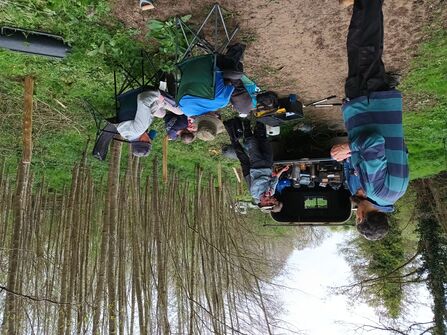
With almost everything prepared on Wednesday, Thursday morning saw me loading the land rover and heading over to meet the volunteers. Senior RO Andy would be joining us for the task, but I would be running it. With fewer volunteers around on Thursday's and a few volunteers not coming as they don't enjoy fencing work, which can be very tiring, or boring, I was glad of SRO Andy's help. VRO Ed was off doing some slow worm surveys for the morning and would join us later as well. Volunteers do this in their time, for no recompense (other than tea and biscuits), there's absolutely no requirement to come and do things they don't like, so we're grateful for any help they can give us. We wouldn't be able to achieve a vast majority of the work we do without them.
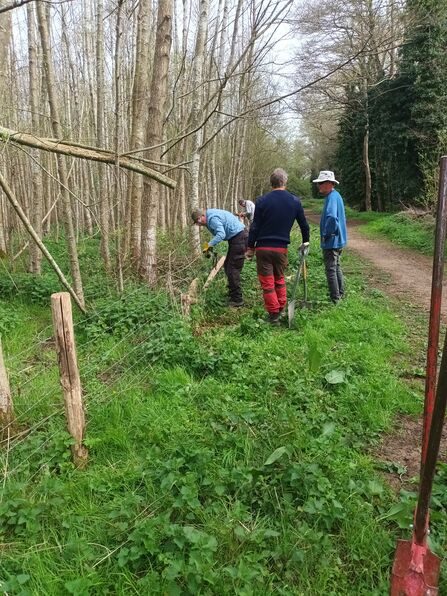
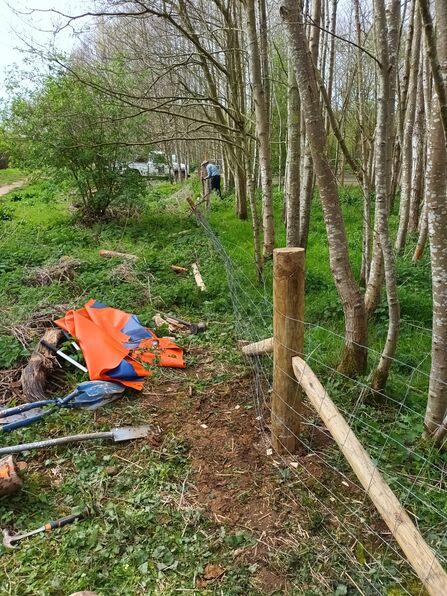
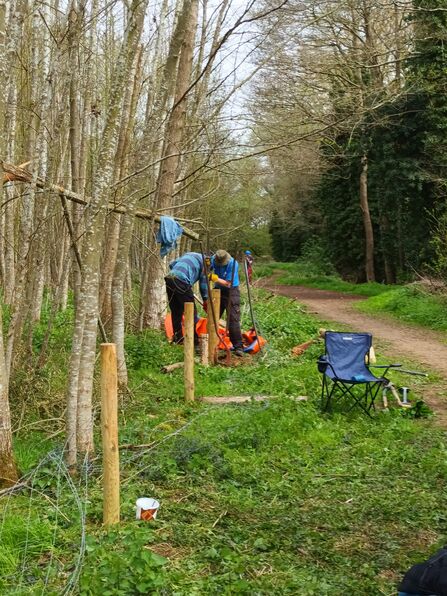
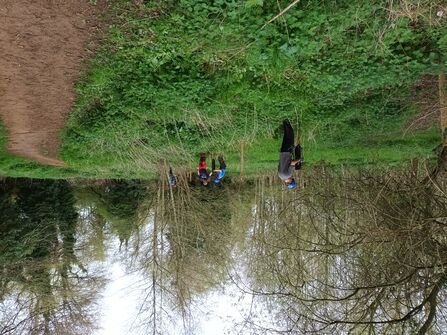
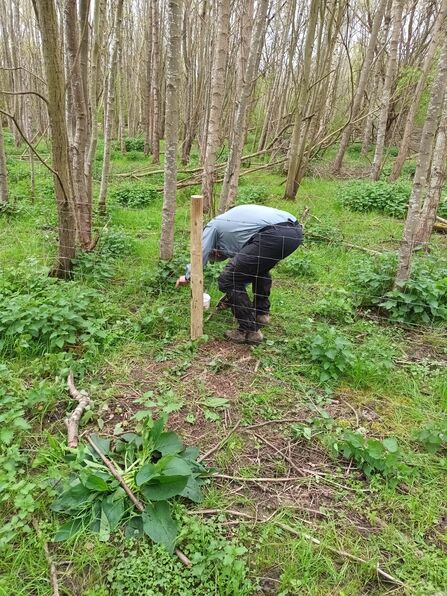
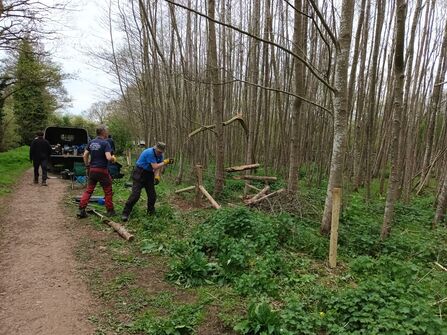
After meeting the volunteers and giving them directions to the task location, I drove the tools round to where we'd be working. To repair the fence we'd need the fence wire tight, and the failed posts replaced. Turning posts are thick, 7-8 ft long posts within a section of fence that can handle the force applied by the wire pushing against it because of a bend in the fence. Straining posts are the same size, but are on either end of a section of wire and the wire is strained between them. In order to tension the wire, we'd need to move it out the way and replace the turning posts first. Ironically, this involves cutting the fence to give us access and ends to pull on for tensioning. The volunteers then split into teams, digging out the ends of the old turning posts, replacing intermediate posts next to the failed posts, and removing the staples holding the wires to the old posts. Digging 4 ft down into clay, or using a heavy Drivall to knock new intermediate posts in is very tiring work and we really appreciate the effort our volunteers put in. Big respect to volunteer John for digging out one turning post alone! Also big thanks to the volunteers knocking in the new posts as they managed to do 31 posts by the end of the task!
Because straining posts and turning posts are being pushed or pulled by the fence, struts are used to give them extra support. Most of the Beds RO's use box struts, as seen in the pic of the old turner. However I learned with diagonal struts and prefer them over box struts, so that's what I did. A notch is cut into the turner to hold the end of the strut, and a half length of post is knocked into the ground as an end stop for the strut to push against. A nail is then used to stop the strut from slipping sideways. The struts are slightly offset from each other vertically to prevent making a thin spot in the turning post.
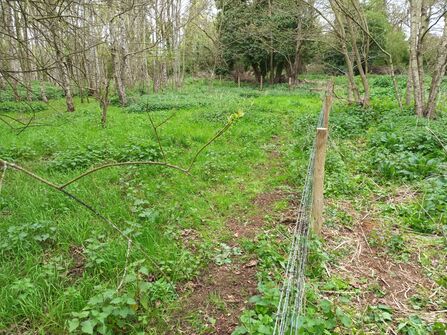
With the turning posts finished, I stitched in a section of new fence wire to give me some overlap and joined the fence together with gripples, which are little grips that hold the cut wires together and only slide one way. With the use of a gripple gun we then pulled the wires through the gripples till the fence was tight again. A similar approach is used for the barb wire. With all the wires tight again, the volunteers set to with hammers and staples and attached the fence to the new posts. The last job for the day was to stack the old posts as a habitat pile. The old posts are untreated chestnut, treated posts are removed from site. 31 intermediates and two turning posts installed in one task, with only six volunteers, is a great outcome, and more than I expected!