Cambridgeshire Reserves

Cambridgeshire Reserves

Members of the reserves team give an update on Cambridgeshire reserves

Eamonn Lawlor (Senior Reserves Officer, West Cambs)

Lattersey

This year, much of our focus at Lattersey has been on understanding and tackling some long-standing drainage issues. It’s one of those jobs that sounds simple enough — until you find yourself knee-deep in mud, tangled in reeds, and wondering how water ever managed to escape this way in the first place.

With the help of our ever-dedicated volunteers, a few former staff members who know the reserve like the back of their hand, and even a bit of good old-fashioned door-knocking with our neighbours, we’ve pieced together a clearer picture of how water moves through the site.

At the back of the reedbed, where water should drain slowly and steadily, blockages had built up over time — layers of silt and vegetation holding everything back. That meant parts of the reedbed couldn’t be cut as usual, leaving the habitat wetter than we’d like for both management and wildlife balance.

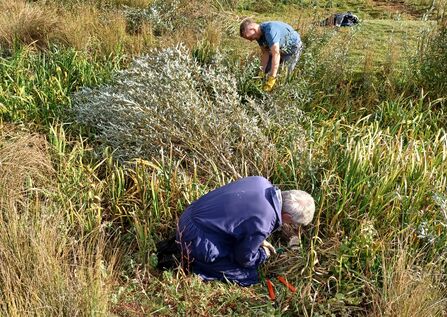
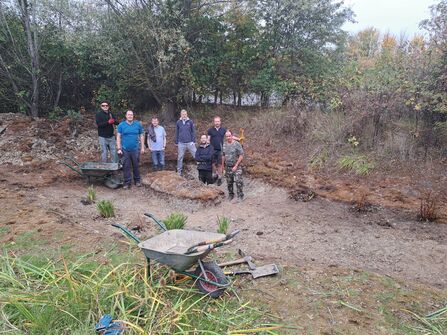
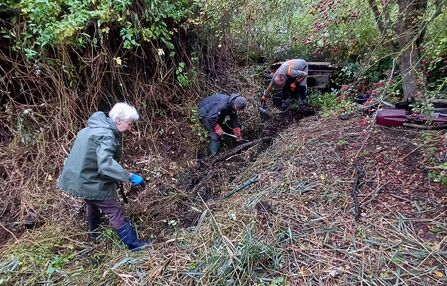
The photo below captures a typical day on site: our hardy volunteers hard at work, clearing years of build-up from the drainage channel. It’s mucky, smelly, and slow-going work — but the team tackled it with their usual determination (and plenty of good humour).

It’s not glamorous work, but it’s at the heart of what keeps Lattersey thriving: a team of dedicated people, sleeves rolled up, making a real difference to the health of the reserve.
Upwood Meadow Ponds - A new lease of life

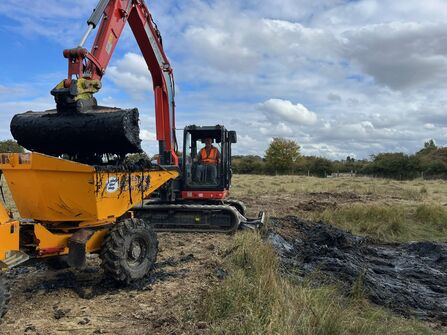
Two ponds at Upwood Meadows have been restored thanks to a grant from Granstscape and to the Ramsey Wind Farm Community Benefit Fund.

See link below for further information:

https://www.wildlifebcn.org/news/ponds-given-new-lease-life-nature

Godmanchester – the small stuff

This week, our Thursday volunteers, led by Reserves Officer Kelsey Wilson, rolled up their sleeves for a job that’s been on the list for a while: cutting back the encroaching willow along the edge of Roman Lake. Over time, the willow had begun to take root in areas we’d previously restored to create a more varied shoreline — places where shallow scrapes and open water now draw in an abundance of birdlife.

It’s tough, physical work, especially when every branch has to be dragged off site by hand. But as always, the team tackled it with good humour, determination, and a healthy dose of teamwork.

Godmanchester – The big stuff

Yet another round of willow clearance at Godmanchester Nature Reserve — but this time, it was the bigger stuff. Over in Mouldings Meadow, the willows had really started to make their presence known. Each year they seem to shoot up taller and thicker, and the longer they’re left, the tougher the job becomes.

We brought in contractors armed with chainsaws to take on the larger trees that had established themselves deep in the reedbed. Left unchecked, they’d soon take over the whole area, shading out the reeds and displacing the wildlife that depends on that open, wet habitat. Once the trees were cut, we treated the stumps to stop them regrowing — which explains the bright red marks you can spot in the photo.

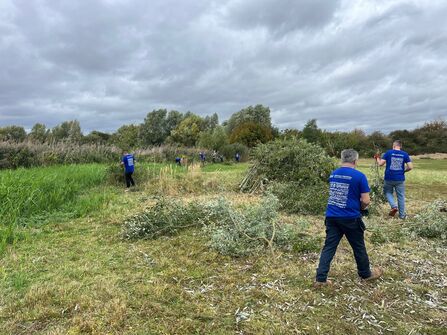
Later in the month, we were joined by a brilliant team of thirty volunteers from Johnson Matthey, a company that regularly supports the BCN Wildlife Trust. Their annual visit is always one of the highlights of our autumn calendar. Everyone got properly stuck in, helping to haul and drag the felled willow out of the reedbed and into the open area, where it was chopped into smaller sections ready for burning later.

It was hard, physical work, but the enthusiasm of the team made all the difference. By the end of the day, Mouldings Meadow was looking much more open again.

Greg Belcher  (Senior Reserves Officer, Grafham Water)

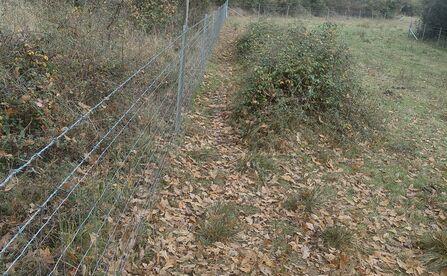
A job normally done in spring, but left until later this year, was the replacement of the fence around one of the grazing paddocks on site.  The original fence in question has required a lot of maintenance over the last few years despite it not being that old, so the decision was taken to replace it. Rather than using the traditional wooden posts with metal stock netting and barbed wire, a more durable all metal system was preferred.  Helped out by colleagues from various teams in Cambridgeshire, 800m of fence was installed ready for the cattle to ‘move in’ at the start of August.

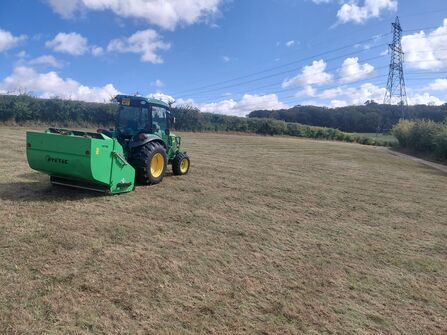
Of course summer is the season of grass cutting and, apart from the help given by our furry four legged mowers, the Grafham grasslands are managed by either brushcutting or by tractor.  Brushcutting is used for the areas that are too small, too steep or otherwise too awkward to get at with the tractor.  Either way it is always important to remove the arisings, the tractor can do that itself having a large hopper as part of the cutting mechanism but the areas we brushcut need to be raked.  Enter once again the Grafham mid week volunteers, who do a sterling job on various areas around the site.

Talking of grasscutting, this summer saw the sad demise of one of the ride-on mowers kept at Grafham Water.  Purchased some twenty two years ago it had provided sterling service up until this year when the engine let go causing damage beyond ecomomic repair.  The hard decision was made to scrap the machine as we still have another to mow the paths around site.

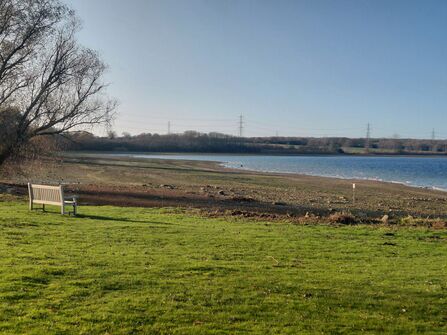
The dry spring and summer has seen the water levels in the reservoir at Grafham drop quite dramatically.  Whilst the levels are now slowly rising the expansive mudflats have attracted a variety of wading and shoreline birds.  Highlights have included Ruff, Curlew Sandpiper, Black-tailed Godwit, Glossy Ibis and, briefly a Squacco Heron.

Trumpington Meadows (Becky Green, Senior Ranger)

Banking on Butterflies

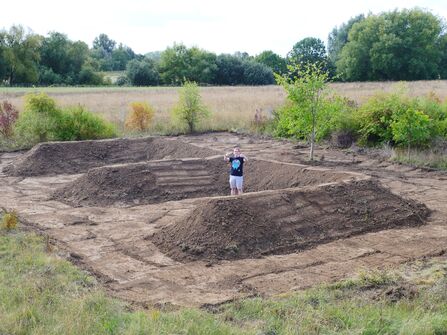
New butterfly banks were created at Trumpington Meadows in September as part of the Banking on Butterflies project. Many of you will be familiar with the similar banks at Pegsdon and Totternhoe. This project is a collaboration with the University of Cambridge Department of Zoology, who have worked closely with the Trust for years, and was funded by the Cambridge Conservation Initiative. Four banks in the shape of the letter E have been built, facing in four directions, to enable the University to study the effects of climate change on invertebrates, particularly butterflies. Trumpington Meadows is the perfect reserve for this, as it is home to 29 species of butterfly including the small blue (Cupido minimus), and is easy to access from the university. The results of these studies will help inform our management of reserves. The banks are bare earth at the moment but will soon be colonised by a range of wildflowers. For more information see this article: Banking on Butterflies project | Wildlife Trust for Beds Cambs & Northants 

River Restoration

Back in 2009 The Wildlife Trust BCN and South Cambs District Council (SCDC) worked together to restore a section of the River Cam alongside Trumpington Meadows nature reserve. The habitat of the River Cam had been degraded over time, mainly due to dredging which had deepened the channel. In order to restore the river, gravel was deposited into the channel to form shoals and fish spawning habitats, and flow deflectors installed to help scour silt and leave the gravel clean and oxygenated. Backwaters were created for fish refuges and sluices helped improve water management to the adjacent flood plains. Overall, this work helped restore flow diversity and benefitted a wide range of wildlife, including water voles, brown trout and kingfishers.

Recently, reserves staff worked with Ruth Hawksley (Water for Wildlife Officer) and Rob Mungovan (Ecologist for the Wild Trout Trust, previously SCDC) to take a look at some of these features, see how they had fared over time, and to plan future work. We took the opportunity to clear some willows across the river and pin them back to the banks, retaining the shelter for wildlife but improving the flow (and access).

Cherry Hinton Chalk Pits (Jenny Smith, Ranger)

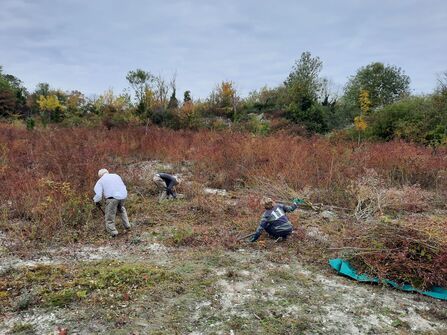
We have worked with the voluntary warden, David Seilly, to restart the work party at the chalk pits to help us keep on top of controlling the amount of scrub. So far they have been tackling the large area of dogwood in East Pit, making sure the delicate chalk grassland species underneath don't get crowded out. They are meeting once a month on a Saturday mornings. If you would like to join them, please contact jenny.smith@wildlifebcn.org to find out more. 

Mark Ricketts (Reserves Manager, East Cambs)

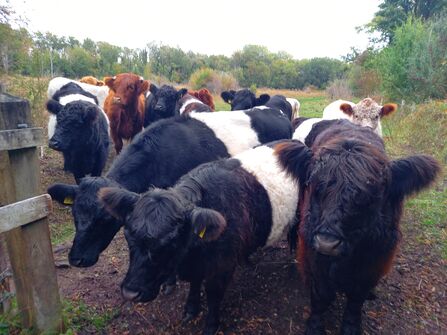
In Fulbourn Fen we have installed more of the new Clipex metal fencing, as this is more durable in damp ground, and some new gates. We have a new grazier on site with Highland cattle and Belted Galloways, and a better level of grazing. 

A new fence has been installed on the track by corporate volunteers and scrub has been treated, to try and stem scrub encroachment. Hedges and brambles have been cut back to allow for future fencing repairs. 

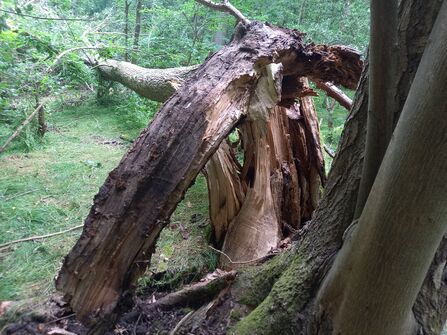
Warden’s work parties have including the clearance of fences, orchard mowing, and scrub clearance.  Ansetts Wood has been closed to the public due to tree safety concerns. It will be reopened only after extensive works have been done to ensure safe access.

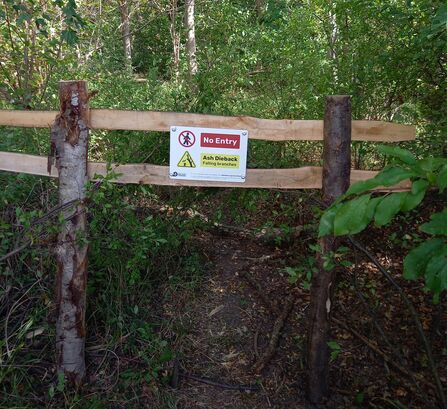
The unfortunate decision has been taken to close off some small paths in Waresley wood, due to trees affected by Ash dieback.

In Cambourne we also have new graziers with Aberdeen Angus cattle and Hebridean sheep. The warden’s work party have been busy with ragwort pulling, pond works, installing new benches, track drainage work and orchard maintenance. We are also doing ongoing tree safety checks.

In Gamlingay Wood we have installed a new gate and created a new entrance nearer the village. We have a new warden and would like to thank the retiring warden for over 30 years of volunteering her time!.

Across all our reserves we have been carrying out woodland ride mowing, woodland and grassland monitoring, structural checks and repairs, tree safety checks and dealing with dangerous trees.