Cambridgeshire Reserves

Cambridgeshire Reserves

Members of the Cambridgeshire team give an update on what's been happening on reserves

Mark Ricketts, Reserves Manager, East Cambs

Fleam Dyke 

Following on from scrub clearance and re-seeding on Mutlow Hill last autumn, as spring growth arrives, we will be controlling weed regrowth to make sure the newly germinated grass can get away. By the end of April water pipe and drinking troughs will have been installed so that we can start grazing with Belted Galloway cattle later in the year.   

Fulbourn Fen 

Ansett’s Wood had to be closed last summer because of a large number of unsafe dead and dying trees. As well as ash dieback, sycamore were suffering from sooty bark disease, and due to the drought of last summer, we also lost pine and beech trees. 

Despite the tight deadlines involved in getting the required permission from Forestry Commission, Natural England and Cambridgeshire Planning Authority, and finding a reliable contractor with space in their schedule, the tree felling was completed by the end of February. 

This has made a big change to the woodland and created a bit of a stir in local media. A lot of time has been spent on communications prior and during the work to reassure people that it was both necessary to do and there are also positive benefits for the woodland.   Further work will be carried out in the autumn, clearing remaining brash piles and planting up a more diverse range of tree species to ensure the woodland is more resilient to effects of climate change in the future.  

Cambourne 

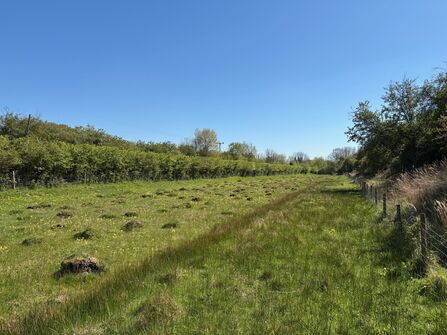
We have laid more hedge and coppiced one hedge line (a less labour-intensive method of management than hedge laying) and are in the middle of replacing or repairing the fences in the meadows before the grazing season begins. 

The warden and volunteers have also been clearing tree guards, burning up brash and building new butterfly banks. These banks are an experiment to see if smaller banks built by hand rather than with a digger are as effective as those in Totternhoe, Pegsdon and Trumpington. If successful the smaller banks might be possible in other locations, for example school grounds. The photo in the header shows the midpoint of construction – when finished there will be shaded and sunny aspects for the butterflies to choose from in all compass directions. The project involved a lot of digging – well done to all those involved! 

Hayley 

Now onto Hayley Wood where you might have heard that we have recently had to close the site temporarily, due to multiple issues with dogs off leads and abuse towards staff. Also, the decision was made to make Hayley a “No dogs” site from now on. 

We had expected to have a bit of a backlash around this, but we have been pleasantly surprised by the amount of support we have received. 

The comments on multiple news stories have nearly all been positive, other Wildlife Trusts have messaged to show their support, and we have even had donations and new members directly linked to it. 

We will see how much support we will have from the members of public that use the wood now that is it re-opened, but hopefully the message has been spread, and people will appreciate what we have done. 

Hayley gate

Waresley 

At Waresley we have unfortunately had a spate of vandalism where someone seems to be very determined to access the most recently reprofiled section of the main ride. This is currently blocked off with temporary fencing to allow the soil to settle and the ride flora to get a foot hold, before they start getting walked on.  

We are hoping to remove this temporary fencing this summer and allow access along the whole stretch of the main ride again. 

Now April is here our main task for the month will be checking and repairing fences on our pastures and meadows so that they are livestock proof ready for the coming grazing season. 

Waresley fencing

Eamonn Lawler, Senior Reserves Officer (West Cambs)

Stanground Wash

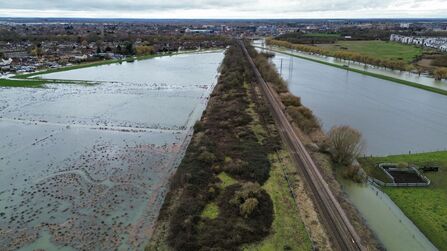
Drone footage, from back in February of this year, provided us with a birds-eye view of a flooded Stanground Wash. The site lies at the southern-most end of the Nene Washes and is part of the greater protected SAC and Ramsar. The grassland areas are prone to flooding every year with the exception of the raised embankment, which you can see running through the middle of the photograph. The grassland floods each winter, providing a shallow water winter refuge for waterfowl and waders. In the summer, it’s grazed by cattle to keep the vegetation low and creates a sward of varied height that’s favoured by some nesting birds and insects. The raised embankment, comprising of railway sidings, is very free draining and has a patchwork of scrub and dry acidic grassland. Every year we host a couple of work parties involving staff and volunteers on the embankment, to help keep the scrub and bramble at bay. The longer-term objective is to clear more of the scrub to create a more open scrub grassland matrix. 

Wistow Wood

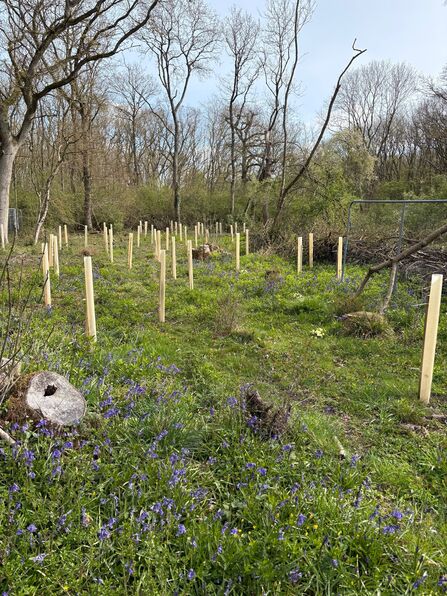
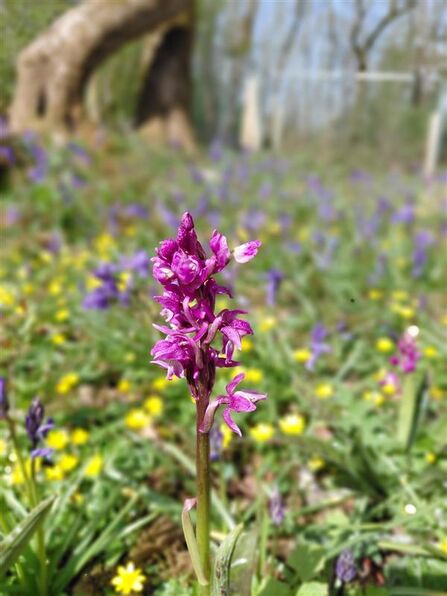
At Wistow Wood, we’ve recently been treated to a small explosion of colour in the form of Early Purple Orchids. Areas coppiced in recent years have brought about a sudden increase in their numbers, and provide a nice distraction from looking up at the many ash trees suffering from Ash Dieback disease. Our West Cambs Thursday Volunteer Group have been helping us to coppice and plant trees along the wood’s southern edge, helping to enhance the wood’s biodiversity and structural diversity

Grafham Water

Over the years, the West Cambs Reserve Team have worked very closely with our colleagues based at Grafham Water. The Grafham Office was not only helpful for managing the Grafham Water Nature Reserve but it provided us with a second base from which we managed other nearby sites as well. 

Sadly, for us, Anglian Water have taken the decision to take management of Grafham Water Nature Reserve back in-house. As a result, we say farewell to Grafham and to one of our staff, Greg Belcher, who has now left the Trust. Mark Ullyet will continue to support other teams in Cambridgeshire but both will be a huge loss to our work. We wish them all the best in the future. More information on this can be read here Statement on the management of Grafham Water Nature Reserve | Wildlife Trust for Beds Cambs & Northants

Grafham farewell

Woodwalton Marsh

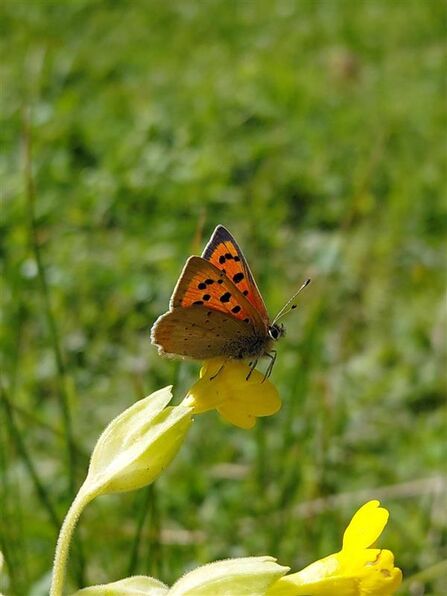
Every now and then, we all need to take a break from our computer. The West Cambs Reserves Team took a recent lunchtime trip to nearby Woodwalton Marsh. It’s a little gem of a site and at this time of the year, it begins to explode with life. Our hope was to, perhaps, get one of the first glimpses of a Grizzled Skipper or maybe even a Green Hairstreak, but despite the glorious weather and abundance of flora on the ground, we were not lucky enough. Instead, we did see this a Small Copper and the first signs Early purple orchids and Twayblade.  

Brampton Wood

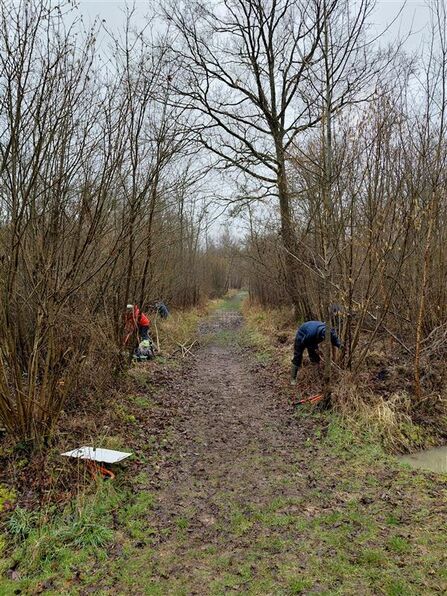
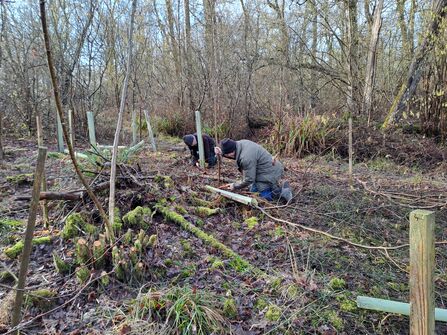
Our Brampton Wood and West Cambs Thursday Volunteers have been busy at Brampton Wood this past winter with coppicing and tree planting. Four hundred new native trees have gone in to help replace trees lost by Ash Dieback disease, with more to come next winter. 

Lattersey

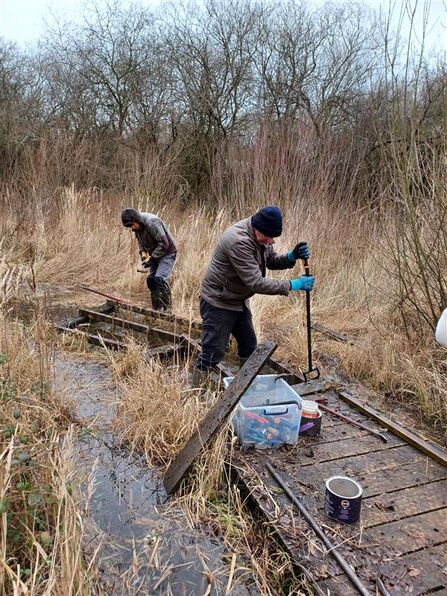
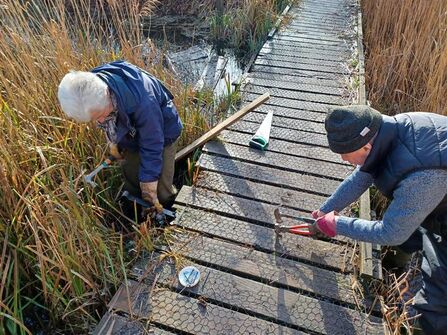
Work continues at Lattersey Nature Reserve, where our Midweek volunteers have been gradually removing parts of the old rotting boardwalk and repairing other sections. A strangely satisfying experience by all accounts.  

Becky Green (Senior Ranger, Trumpington Meadows)  and Jenny Smith (Ranger, Trumpington Meadows and Cambs)

Trumpington Meadows 

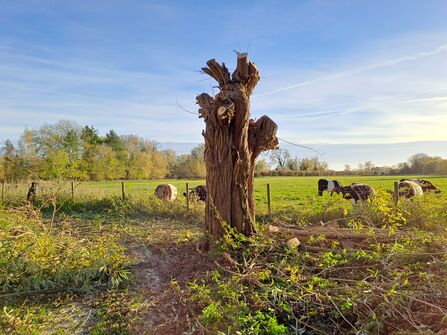
The focus over winter has been on hedge laying, scrub removal, and re-pollarding some of our many willows. This wouldn’t have been possible without the help of our hard working and enthusiastic Volunteer Officer, Anna. Anna is the first ever Trumpington VO, and has set the bar very high for the future!  

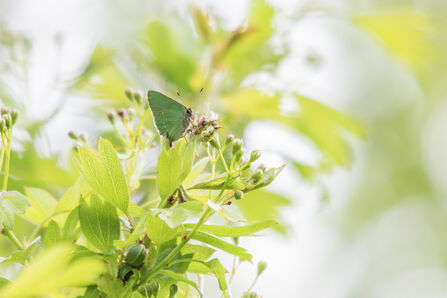
Now spring is here staff and volunteers alike have been busy with various surveys. We’ve recently set up a new butterfly transect in the north of the reserve thanks to some new volunteers, who’ve been excited to see the recently emerged green hairstreaks.

Cherry Hinton Chalk Pits - East Pit 

The newly reestablished work party has been a great success over the autumn and winter season. Lead by voluntary warden David Seilly they have contributed over 100 hours of time to clearing scrub, mainly dogwood as well as buddleia and cotoneaster. They will start again in the autumn, meeting once a month on a Saturday. If you are interested to hear when they start again please contact jenny.smith@wildifebcn.org.

We also have a new email address for the site EastPit@wildlifebcn.org for reports of any wildlife sightings or issues at this nature reserve, if you spot anything unusual please do report it to this address 

Lower Wood

The volunteer team, led by voluntary wardens Duncan Mackay and Mike Nunn, have spent winter completing the annual coppice plot. They coppiced the hazel, and also made time to help improve the plot by layering some stems and planting new trees in the gaps. We were able to use some of the coppice product for hedgelaying stakes.