The life of a Wildlife Trust CEO: Brian Eversham answers questions from young people

The life of a Wildlife Trust CEO: Brian Eversham answers questions from young people

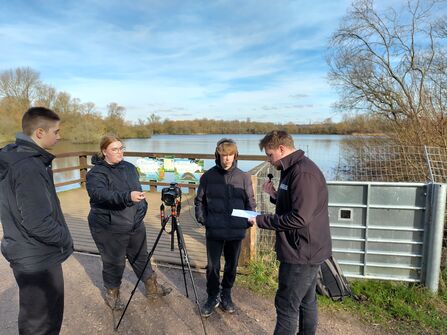
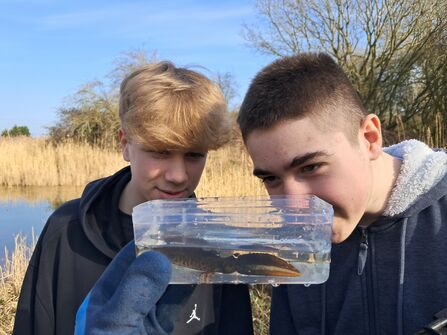
Dom and Torrin, aged 15, recently joined Wildlife Trust BCN staff for a week of work experience, spending time on reserves, making a video to promote our Wildlife Gardening Award and learning about how our teams work in communities.
Whilst they were here they got the chance to sit down with our CEO Brian Eversham and ask him all about the challenge of running a Wildlife Trust and why young people like them should care about nature conservation.

If someone wanted to become a regional CEO for the Wildlife Trust how could they?

Two totally different ways. The way I did was to learn about wildlife when I was young, study wildlife at university and work in research, then work on the conservation side of the Trust and make my way through the ranks to get the job. Other people go into business, work in banking or insurance or industry. Then move sideways into the Trust having shown that they can run an organisation.

Did you work with the Wildlife Trust before you became the CEO?

Yes, my career path was school, university, a year working for the government conservation agency and I then moved from there to a research station at a nature reserve. I worked there for 15 years and while I was there I volunteered for the Trust and then moved to be in conservation at the Trust. I worked here for 15 years getting to know the place and the people, then the CEO retired and I took over.

Torrin, Dom and Brian

What is your favourite reserve that the Wildlife Trust owns?

I do a lot of teaching in my free time outside the Trust, and my favourite teaching place is Old Sulehay and Ring Haw in Northamptonshire where we’ve got amazing ancient woodlands, really good limestone grassland and everything in-between. I grew up in Yorkshire and I’ve always been keen on wetlands, so the Great Fen is very close to my heart. But the reserve I feel most comfortable in is Coopers Hill, at Ampthill in Bedfordshire. 

If you could have a different job within the Wildlife Trust, what would you choose?

If I didn’t have to worry about money or anything else, it would be something on the survey and monitoring side, and if I could I would specialise in monitoring insects because you only do it on sunny days. 

What do you do in an average day’s work?

I sit in front of my computer, I write, I read emails and I have lots of meetings.

Would you prefer if your job involved more outdoor activities?

Yes, it used to as a conservation director. I get out one or two days a week with work, but I spend a lot of my spare time outside, so I probably get as much time out in the field as quite a lot of our field staff. 

How long have you spent here with the Wildlife Trust and have you ever felt that your job has gotten boring?

This is my 28th year. No, though it can get stressful at times. I do occasionally worry where the money’s coming from. And little bits of the job are not as exciting as other bits. For example, reporting to committees and editing other people's reports to committees is the tedious bit that has to be done. 

What do you enjoy the most about your job?

There’s two sides of it, the one that I expected to enjoy is when I do get out on nature reserves and spend time with nature. The other side of the job which I thought would not be good is talking to other people about wildlife, and it turns out that is something I get really excited about.

Should there be more opportunities to learn and study about nature while in education?

Very definitely yes, we need the need the GCSE in Natural History and we need it soon. As someone whose degree is in life sciences, I think biology is probably the most rounded subject as it give a variety of useful skills in the field.

What are the barriers for young people entering wildlife conservation?

Quite a few but we’re trying hard to break them down. First of all, it's easy for a wildlife charity, while looking for staff, to say we want people with experience. So I think we need to provide the opportunities. For example after school or university you should be able to join the Wildlife Trust as a trainee to fill the gaps so that you have experience for a full time job. Another really tough barrier is that we don’t pay particularly high salaries.

What qualifications should a young person go after to join wildlife conservation?

There are two approaches, if you enjoy learning then you should do A levels and go on to get a degree in something to do with the field you want to work in. The alternative route is to work outdoors and get licenses with things like chainsaws or brush cutters, so it could be something such as agriculture or forestry. 

But you can come to us from most backgrounds - some of our very best staff have come to us in there 30s or 40s having done something totally different. I think we’ve now got three ex policemen on our staff.

Do you think it’s good for the Wildlife Trusts to be a federal structure rather than a national organisation?

I think so, I think one of the biggest comparisons between national and regional is the Wildlife Trust and the RSPB. We both have similar statistics like our number of staff and the money we spend but the RSPB has about 220 reserves while the Wildlife Trusts have 2,500 reserves. However we both manage about 100,000 hectares of land. So the RSPB have a small number of big reserves which lots of people go to, we have a few sites like that, but we also lots of small sites which have local importance. One of our famous statistics is 90% of the population live within 5 miles of one of our reserves. Other positive aspects are that we are individually not big enough to be seen as threatening, you’ll see national campaigns against the RSPB’s policies, and major landowners who will not talk to the RSPB. But almost all of those don’t campaign against Wildlife Trusts.

What three Government policies would you change for the benefit of wildlife conservation?

The first one has got to be something about climate change, we need fixed immoveable targets for net zero. The second one is to undo damage to the planning system. Planning to me should be largely local people making decisions that work locally, we don’t want central government imposing things. At the moment we’re in danger of central Government in London saying between Oxford and Cambridge you must build one million houses. The people who live between Oxford and Cambridge do not want one million new houses, and I think local people should be able to say no that’s not what we want. Then I think the final one would be something to do with education. Understanding climate and environment should be part of everyone's growing up because that’s what’s important in the world they’re being brought into.