Thank you to everyone for your patience while we have been carrying out work at Ansetts Wood. The site is now open to the public. It does not look the same as it did and the work will be very noticeable for those who regularly visit the site. While it looks severe, the work was essential to ensure the future of the wood and it will come back stronger and healthier.
We have had many questions from the public and have responded to them as best we can. So we thought we would put some of the most regular questions together with the answers here.
We care a great deal for the nature at Fulbourn Fen, Fleam Dyke and all our other nature reserves nearby. We are also focussed on ensuring the public can access and enjoy these places.
What has been happening at Ansetts Wood?
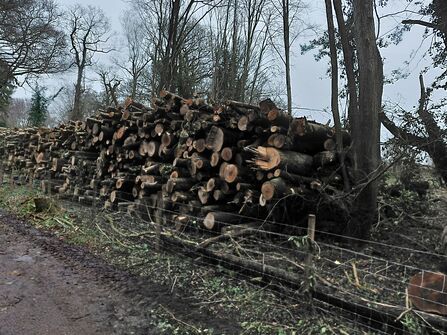
A contractor employed by the Wildlife Trust has been removing diseased trees – mostly ash trees suffering from ash dieback. They have been working to a plan which was scrutinised and approved by Natural England, the Forestry Commission and South Cambs District Council.
Why was this work necessary?
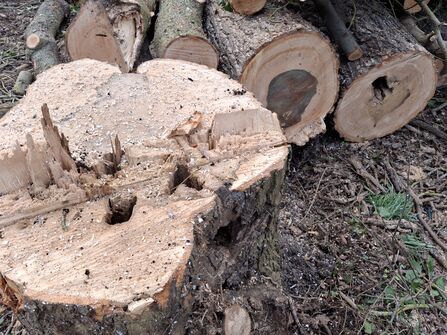
Ash dieback has taken hold in our woodlands over the past ten years and now almost all the ash trees on our reserves are suffering from it. If you look at the image below of the trees that were removed you can see the telltale dark circle in the middle of each trunk.
Another issue, however, cannot be seen at all. Now weakened, the trees succumb to a secondary fungal infection affecting the roots of the trees, and they can then topple over at any point. Staff have been dealing with a quite a few individual trees by hand for the past three years. And it is not just ash dieback, for example sycamore in the woods is suffering from sooty bark disease.
Last year’s drought accelerated the issue and the number of trees affected increased sharply. We lost beech, pine and sycamore, as well as ash. Our woodlands will continue to suffer extremes of weather conditions due to climate change.
It got to the point last year where it was no longer safe for the public to enter and we were forced to close it. In order to make it safe, protect the wood and reopen it to the public we had to remove affected trees.
Why did large machinery have to be used?
Our staff have removed a number of trees using hand held equipment but for a job on this scale health and safety considerations meant this was impossible. The condition and size of the trees involved meant using a machine was the only safe method to deal with them.
Have some healthy trees removed?
No. All the trees removed were suffering from disease. Some of these may have looked healthy externally but were affected by ash dieback or other disease and would have become unsafe.
What are the future plans for Ansetts Wood?
The wood is now open and we will start the work of regenerating it. In the autumn we will be planting trees with more diversity so that the wood will return stronger and healthier. It will soon start to look greener and more pleasant to visit, and a range of wildlife will find the woodland a better habitat than before.
Was there an alternative solution?
The only alternative would have been to close the wood to the public permanently. We would not have been able to replant trees or manage it in a way that protects the site and allows access.
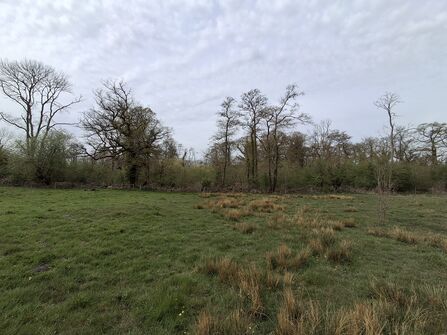
There are large areas of woodland at Fulbourn Fen that are not open to the public and have not been managed in this way – see the image below. As you can see from these photos there is open air where there should be closed canopy. Many of the trees have succumbed to disease and have fallen over making the wood dangerous to enter and difficult to manage.
How was wildlife affected?
The work was carried out outside of bird nesting season, and there are large areas of alternative woodland nearby for birds and other species to use. In the long term as the wood regrows with more diverse tree species it will be able to support more wildlife including birds, insects and mammals.
Is this sort of work happening anywhere else?
Many thousands of ash trees are being removed on nature reserves, in parks and along road verges across the UK by councils, the National Trust, Wildlife Trusts and others. It is a nationwide issue and is costing land managers millions to deal with.
How can I help support Fulbourn Fen for the future?
There are lots of ways you can help keep Ansetts Wood, Fulbourn Fen and Fleam Dyke healthy, thriving and accessible.
We hold regular volunteer work parties which you can join to carry out essential tasks, learn more about nature reserve management and meet new people.
Dogs are welcome to anyone who visits Fulbourn Fen or Fleam Dyke. Ansett’s Wood is one of the few places where we allow dogs off leads. Everywhere else dogs must be kept on a lead to protect wildlife, livestock, staff and visitors.
Join the Wildlife Trust and you will play a part in our work. You will receive a members magazine three times a year and you will get money off events and be invited to our annual members day and AGM.
Make a one off donation. Our Wilder Future Fund was launched last year to help fund the huge amount of conservation and education work the Trust carries out across our three counties for the next five years. Find out more at URL
Join our mailing list. Sign up for our free newsletter and receive news, advice and inspiration to help you make the most of nature near you and do your bit to help.