It’s about to get wet…hopefully. A Strawberry Hill update

It’s about to get wet…hopefully. A Strawberry Hill update

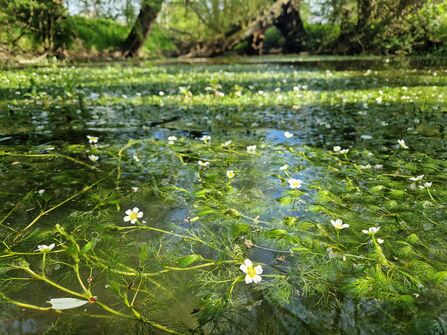
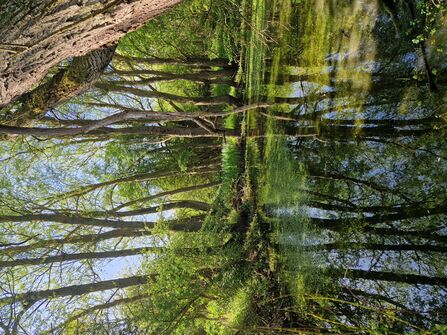
Willow Pond – an existing pond at Strawberry Hill was full of water crow foot in the spring of 2025. Photo credit – Chantelle Warriner.  

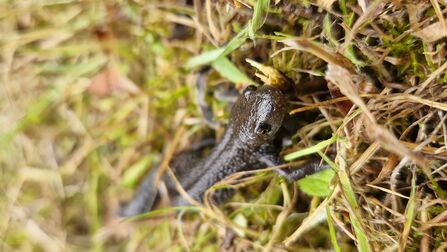
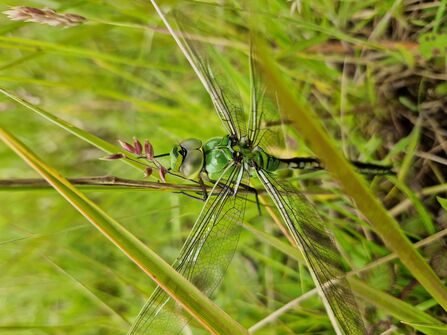
Strawberry Hill is flourishing with new life as six new ponds transform the landscape. The introduction of these new habitats promise thriving newt populations, richer biodiversity and a wilder, more resilient future for the reserve. Read on to learn more.

Ponds are marvellous places. They have the wonderous ability to provide a rich habitat for a huge variety of wildlife while also providing an exquisitely beautiful backdrop for all our senses. For many of us ponds provide a tranquil space that ignites our innate curiosity in the natural world. As children we were drawn to them, the temptation to poke sticks into their depths in search of weird and wonderful beasties is relatable well into adulthood. Often, ponds provided the backdrop for some of our first memorable interactions with wildlife. Whether it was pond dipping on a school trip to your local nature reserve or watching in awe as a tiny black dot covered in jelly gradually transformed into a tiny but perfectly formed froglet. Ponds were the vessel that enabled us to connect with nature. They taught us about food webs, lifecycles and the importance of water for all life.  

It was always our intention to create new ponds for wildlife at Strawberry Hill. Their ecological benefits within the landscape often far exceed their modest footprint. Freshwater ponds not only provide habitat and drinking water for a myriad of species, including insects, amphibians, birds and mammals. They also help to mitigate against many impacts of climate change – they absorb carbon, aid in flood defence and act as life giving reservoirs in times of drought by replenishing groundwater stores and providing drinking water for thirsty animals. So, when representatives from the Newt Conservation Partnership got in touch with us to discuss a collaborative pond creation project on our land, we were curious to hear what they had to say.  

Made up of staff from the Freshwater Habitats Trust and the Amphibian and Reptile Conservation Trust, two leading NGOs, the Newt Conservation Partnership or NCP, is the practical delivery partner for the NatureSpace District Licensing Scheme. Developers pay into this Natural England approved scheme to compensate for their impacts on Great Crested Newts (GCN) and the funds are used for the creation and long-term management of GCN habitat. NCP focuses on delivering new clean water ponds and enhancing the surrounding habitats in places where newts can thrive long term.  
Owing to the sheer acreage of high-quality terrestrial habitat at Strawberry Hill and the confirmed presence of GCN in our existing ponds, our site represented a rare opportunity to create a network of ponds to support GCN at the metapopulation scale. A metapopulation is a group of interconnected populations, where individuals move between several breeding ponds within a landscape connected by suitable terrestrial habitat.  With the suitability of the terrestrial habitat assured, in October 2024 we set about digging 6 test pits across the southern half of Strawberry Hill to test the land for its suitability for pond creation. The dominant geology at Strawberry Hill is Oxford Clay, renowned for its ability to hold water, so we were hopeful the test pits would hold water well. To our delight, four out of the six test pits held water well into the driest months of 2025 (quite a feat given the weather this year). This allowed us to pinpoint the best locations for our new network of ponds.  

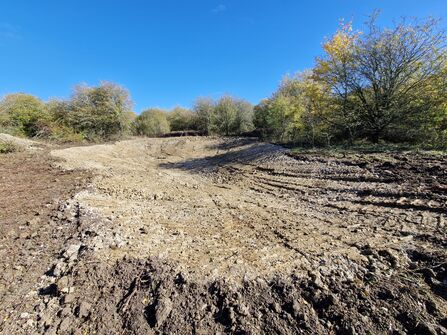
In October 2025, one year after the test pits were dug, we broke ground on our first new pond. This was a seamless process involving a skilled contractor and a knowledgeable project lead from NCP. In just over two weeks, six new ponds had been created within high quality scrub and grassland habitat at Strawberry Hill. Each pond has its own unique shape, size and depth profile, creating a range of pond ecosystems with their own unique microhabitats. When created sensitively with both land and water in mind, a pond can become a space where land and water seamlessly interact. To achieve this, each pond has a gently sloping edge with shallow margins. This encourages wetland plants to colonise but also provides safe access to freshwater for many animals, including the threatened Turtle Dove. The Turtle Dove breeds successfully on site at Strawberry Hill and is just one of the many species set to benefit from the newly created ponds.  

Given the impressive scale of the newly created ponds, there was a lot of spoil and brash generated which needed to find a new home. After careful consideration for proper placement, our contractor went on to skilfully create many hibernacula near the new ponds. These hibernacula, otherwise known as habitat piles, were created by burying brash from removed scrub with the spoil from the new pond sites. This resulted in a maze of sheltered nooks and crannies where GCN can bury themselves and hibernate over winter. The habitat piles will also provide opportunities for a myriad of burrowing insects and deadwood specialists which in turn provide food for birds, small mammals and amphibians, such as Great Crested Newts.  

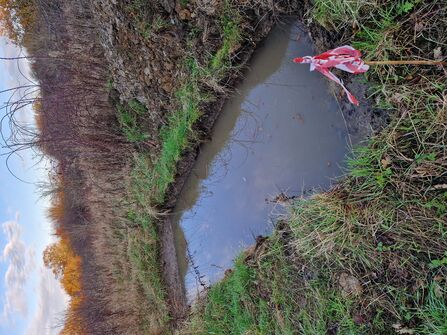
At the time of writing this blog, one month after the ponds were completed, I am pleased to report that the newly created ponds are slowly but surely beginning to fill. I am excited to see what this next chapter in Strawberry Hill’s journey holds for its extraordinary wildlife. But before then, if it’s not too much to ask, please could you all do a little rain dance to encourage things along.  

If you would like to know more about what is happening at Strawberry Hill or volunteer with us, please contact Chantelle at chantelle.warriner@wildlifebcn.org  

More from Strawberry Hill: