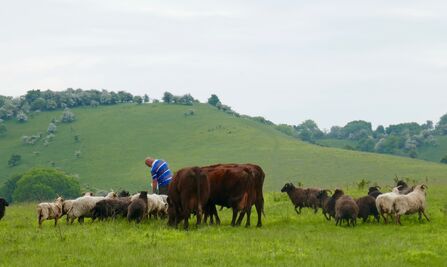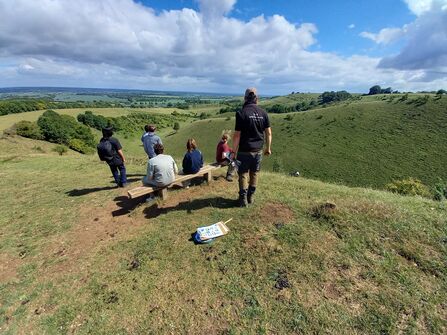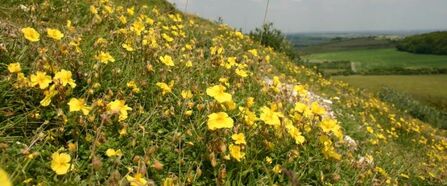
The project is based at Pegsdon Hills in Bedfordshire, a Wildlife Trust BCN reserve, a vital habitat for a range of threatened species including skylarks, green hairstreak butterflies, white helleborine and glow-worms. Other sites which will benefit from the project include nearby former quarry site Totternhoe, also owned by the Wildlife Trust, and Hexton Estate, owned by Natural England.
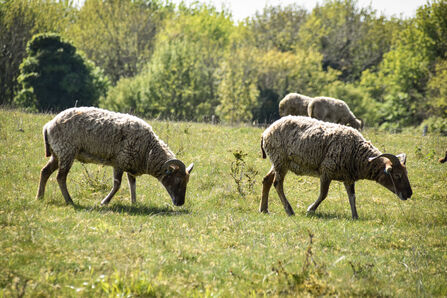
Grazing cattle and sheep are a key part of managing chalk grassland, alongside removal of invasive scrub by hand.
The funding has allowed the reserves team to purchase vital livestock management equipment including no-fence cattle collars and a portable cattle crush as well as machinery to assist staff and volunteers to clear and dispose of scrub.
Aidan Matthews, Bedfordshire Reserves Manager, said: “My team and our volunteers work very hard to protect Pegsdon and other Chilterns chalk sites nearby, and now with this new equipment we can do even more.
“We’re extremely grateful to the Big Chalk Nature Recovery Fund for supporting us, this funding will make a huge difference for nature as well as the many people who love to visit these special places.
“The unique geology of chalk grassland means it can support a huge array of species, some of which are found nowhere else. But keeping invasive plants from taking over to allow rare wildflowers the space to thrive is essential for the health of the ecosystem.”
The project is one of 21 others funded in the latest round of awards from the Big Chalk programme and Nature Recovery Fund, funded through the Protected Landscapes Partnership, supported by Defra. The Fund enables partners to work across landscape and administrative boundaries, reaching the important places in-between protected landscapes and creating the conditions for nature to thrive. Together, the projects supported by the Fund will contribute directly to the goals of the Government’s recently updated Environmental Improvement Plan for England.