
Wildlife Trust Habitat Banks in Cambridgeshire
The following Habitat Bank sites are now providing BNG units for local developers looking to minimise their environmental impact and maximise benefits to nature. The Wildlife Trust BCN is an approved supplier of high integrity Biodiversity Units, registered, managed and monitored according to statutory requirements of Natural England, Defra and the Local Councils.
The Wildlife Trusts operate our habitat banks to a “gold standard” ensuring that new habitats will be provided in perpetuity, not just for 30 years as set out in legislation. Each of our habitat banks is contributing to the local nature recovery network, expanding existing nature reserves to create better, bigger, more and joined up nature sites in line with nature recovery principles.
To find out more, including options and costs for BNG, please contact: Martin Baker at martin.baker@wildlifebcn.org
Flack Field, Fulbourn Fen
In 2022, the Wildlife Trust BCN added Flack Field to our Fulbourn Fen nature reserve, with both areas leased from the adjacent Estate for over 30 years. Although small at just over 3 Ha, it has increased the size of the existing Fulbourn Fen nature reserve by over 10%.
Our long-term vision is to create a single large nature site at the heart of the Cambridge Nature Network, where species-rich grasslands full of wildflowers and teeming with insect life will be intermixed with areas of scrub and woodland rich in bird song. In time the plan is to fully connect Fulbourn Fen with Fleam Dyke (see below).
Flack Field was arable farmland up to summer 2022. In the autumn of 2022, a native wildflower seed mix was sown and in the first year 12 out of the 15 sown wildflower species have successfully germinated. During the first summer the grassland was cut and since 2024 it has been managed with an annual hay cut. In the future it will also be grazed in autumn by cattle. The initial habitat creation was funded from the sale of Biodiversity Units to a nearby major development, and the remaining Biodiversity Units are being sold to fund long-term management and enhancement, with the income shared between the Estate and Wildlife Trust.
Wilbraham Fields, Fleam Dyke
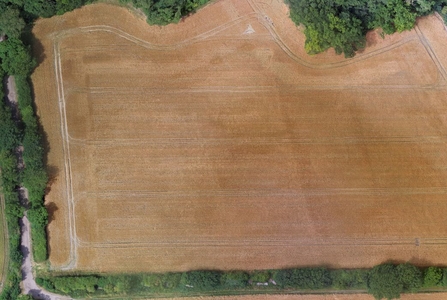
The Wildlife Trust purchased a significant length of Fleam Dyke SSSI and Scheduled Monument in late 2023, along with 7.59 Ha of adjacent arable land. The land, along with Fulbourn Fen (see above) is located at the heart of the Cambridge Nature Network.
Fleam Dyke is a long, narrow, linear chalk grassland site that is difficult to manage with grazing animals. The purchase of the arable land creates a larger, more sustainable land management unit. It also provides an opportunity to create species-rich chalk grassland and complementary scrub habitats to buffer and extend Fleam Dyke.
Habitat creation took place in late summer/autumn 2024, with the long-term plan to manage the new grasslands through sheep grazing (and possibly cattle), partnering with a local farmer looking to set up his own livestock business. The sale of Biodiversity Units will help pay for the purchase of the land, creation of habitats and their long-term management.
Great Fen
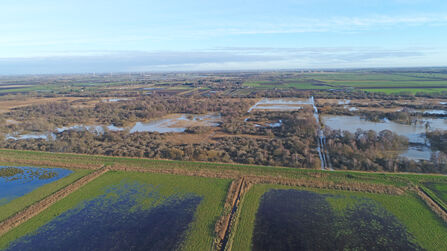
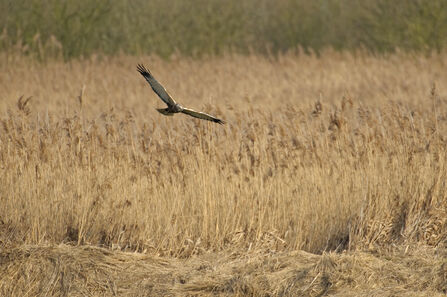
The Great Fen is a 37 Km2 landscape-scale wetland restoration project on the edge of the Cambridgeshire fens. The long-term Vision is to create a wilder landscape of fens, reedbeds and wet grasslands with ponds and ditches, alongside species-rich lowland meadows and areas of scrub and woodland on the drier ground. These will support a rich array of specialist wetland plants, invertebrates, wildfowl, waders, raptors and songbirds.
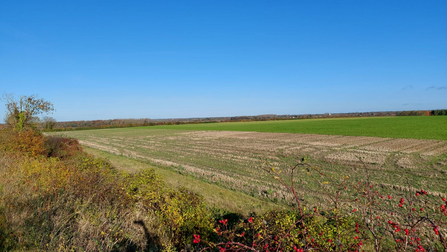
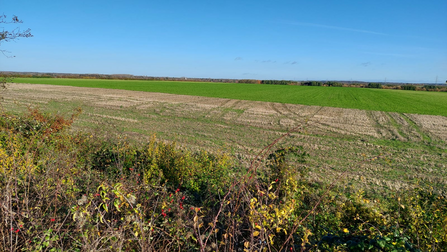
There are opportunities across the Great Fen to create a variety of habitats within one or more habitat banks. The Wildlife Trust has created species-rich grassland on part of Stokes Farm to supply Biodiversity Units for a nearby development. UK wild origin native wildflower seeds were sown in autumn 2023 and the land is managed through an annual hay cut and late season grazing with cattle or sheep.
We are also working on other options to create a larger habitat bank site covering a significant part of one or more farms. These have the potential to supply hundreds of Biodiversity Units, subject to demand from the statutory Biodiversity Net Gain market or to deliver voluntary biodiversity credits. We would be pleased to discuss options with prospective purchasers.
Henry Stanier
Chris Gomersall/2020 VISION
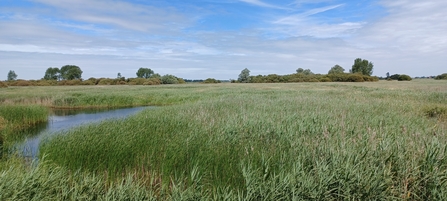
Reeds at the Great Fen by Henry Stanier