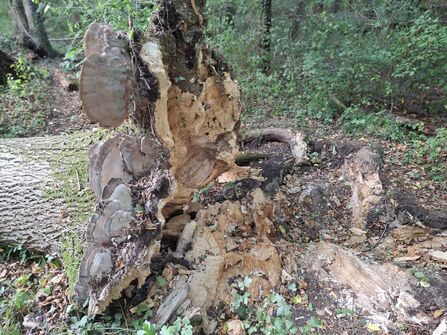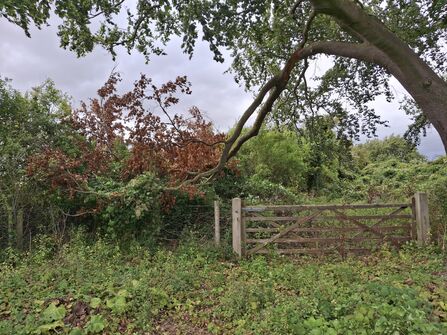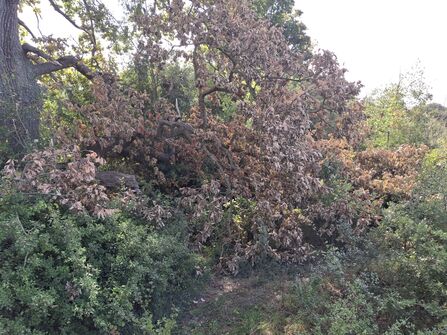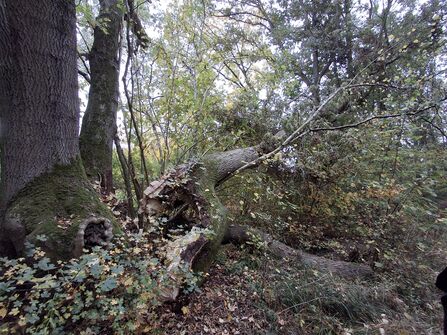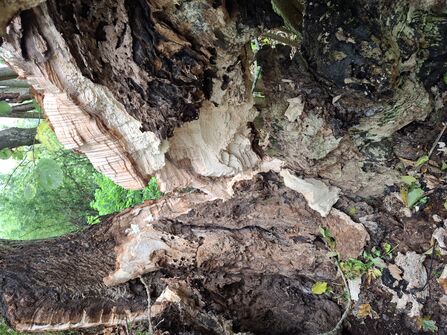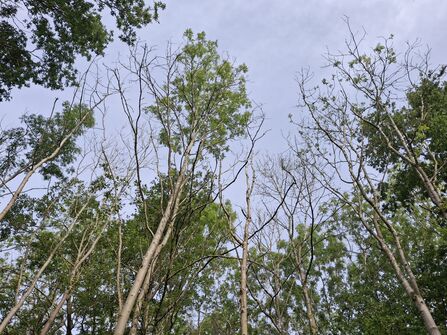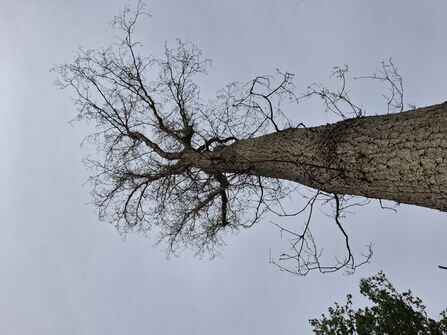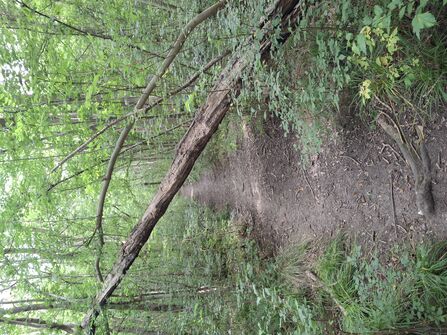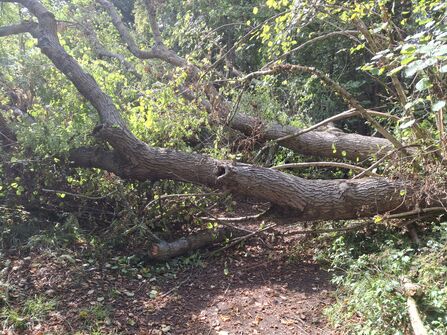
The survey has looked at nearly 6,000 trees and found that 29% are suffering with tree diseases – this rises to 82% in ash trees as the ash dieback fungal infection continues to hit woodlands.
The charity has launched a fundraising drive to help manage affected woodlands. It is taking part in the Big Give Christmas Challenge from December 2-9 to raise £15,000. All public donations will be doubled during the week by philanthropic supporters
Conservation scientists say the steady rise in tree disease is a clear impact of climate change and invasive species. New pests and diseases introduced to the UK and recent mild wet winters have resulted in the spread which is putting already vulnerable woodlands under further threat.
The Wildlife Trust BCN’s Woodland Condition Monitoring Survey began in 2021 and as of this year has covered 21 different sites. The team identify all the trees within a sample area and record everything about the health of the woodland from the girth and health of the trees to the wildflowers on the woodland floor around them.
The most common species recorded is ash – which is also the most diseased - with the next most common species recorded as oak, elm, hazel and hawthorn. In total 32 species have been recorded. The rarest is the wild service tree, a species often associated with ancient woodlands, a designation given to woodlands which have been continuously wooded since 1600.
Josh Hellon, Monitoring and Research Manager, said: “This is the biggest assessment of the health of the woodlands in our patch we’ve ever undertaken, and the results are very worrying. Our conservation teams are getting very used to managing the impacts of ash dieback and other tree diseases, and these results show the stark numbers we’re dealing with.
“Ash dieback is having the biggest impact, with 100% of surveyed ash trees infected in some woodlands. Looking up in our woodlands at the height of summer this year there were clear breaks in the canopy where there would have been continuous leaf cover just a few years ago.
“Other native trees are also under threat - elm disease still takes a toll on mature trees. Alder dieback, acute oak decline and other threats like oak powdery mildew and oak processionary moth are on the rise.
“We are responding to this woodland crisis by trialling new techniques to manage sites, clear felling and replanting areas. We are also having to close some reserves for limited periods to allow work to take place safely. This takes more staff time, requires more funding and impacts access for local communities.”
Sites where we are having to the change the way we work include,
Waresley Wood, Cambs – removing affected ash trees and reprofiling rides to improve drainage and tackle waterlogging and trampling of wildflowers.
Lower Wood, Cambs – comparing two different management options for dealing with ash dieback in one our most severely affected woodlands. One area has been clearfelled and replanted while another area is being left without intervention.
Hayley Wood, Cambs – trialling new tactics to protect newly planted young trees including spraying deer repellent on saplings and planting at double the normal density.
To help raise emergency funds to tackle the issue the Wildlife Trust has launched a fundraising campaign focussed on woodlands. The charity is taking part in The Big Give Christmas Challenge during the first week of December. During the week all donations from the public will be doubled by philanthropists and businesses. To find out more visit www.wildlifebcn.org/news/donations-doubled-nature-during-big-give-week