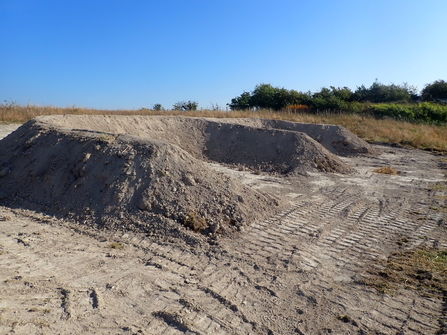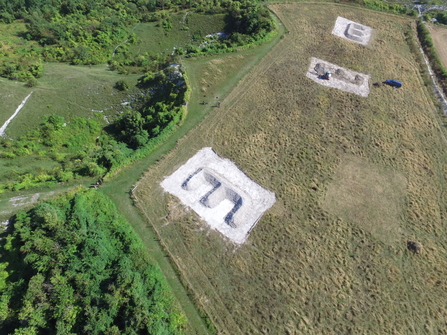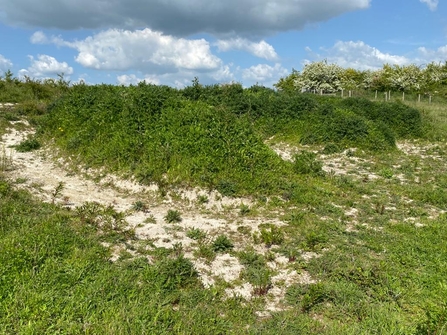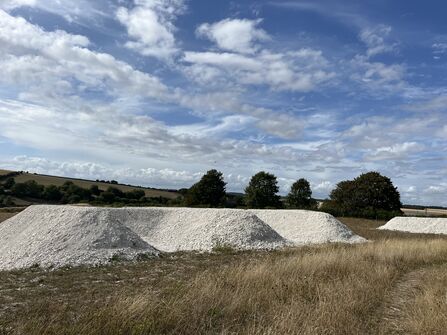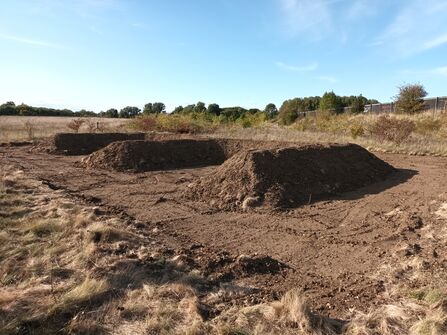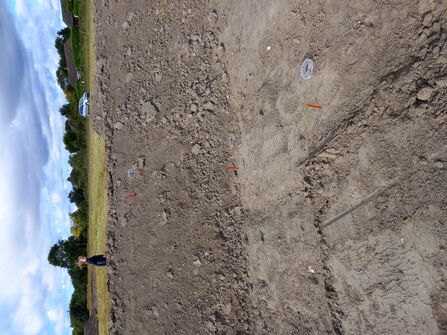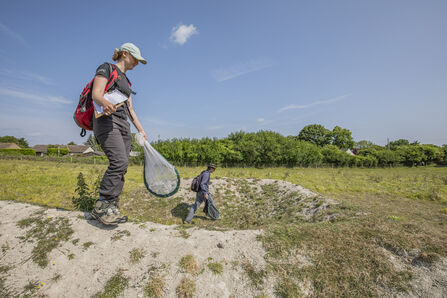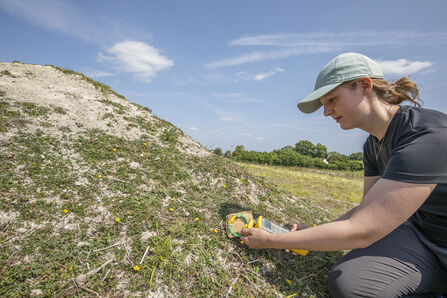

The Banking on Butterflies project aims to improve our understanding of how to support butterflies in the face of climate change using mounds of earth called ‘butterfly banks’. The banks we have built are E-shaped, with dimensions of 15m by 12m by2 m, and are designed to provide a range of temperatures, shelter and shade to help butterflies control their body temperature. The patches of bare ground on the banks, which remain even after several years of plant growth, are very important because the temperature there is often different to the temperature on nearby plants. The patches of bare, chalky soil also give an opportunity for the seeds of chalk grassland specialist plants to germinate without being shaded out by surrounding grass. These plants, in turn, are food for the caterpillars of chalk grassland specialist butterflies such as the nationally scarce Small Blue.
The project started in Bedfordshire, with four banks at Pegsdon Hills Nature Reserve and four at Totternhoe Nature Reserve completed in 2021. In 2024, we built eight more banks in Wiltshire – four at the Wiltshire Wildlife Trust site Coombe Bissett Down and four at the RSPB’s Winterbourne Downs. In 2025, another four banks were built, this time at Trumpington Meadows in Cambridge. There are more exciting plans for additional banks in 2026 – hopefully expanding to another county!
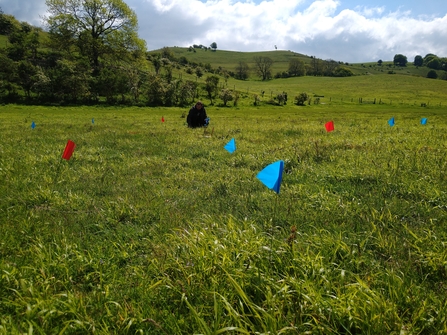
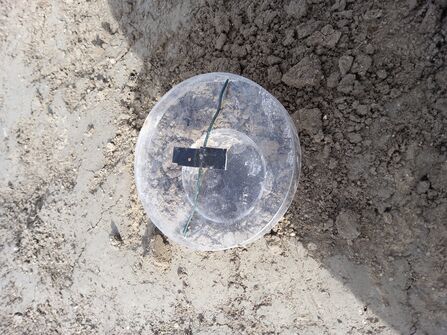
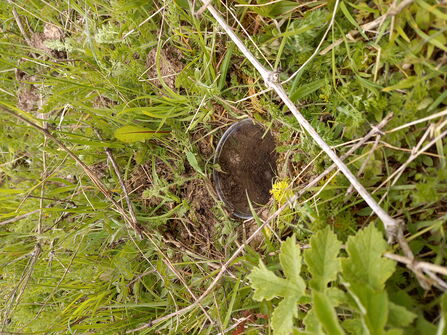
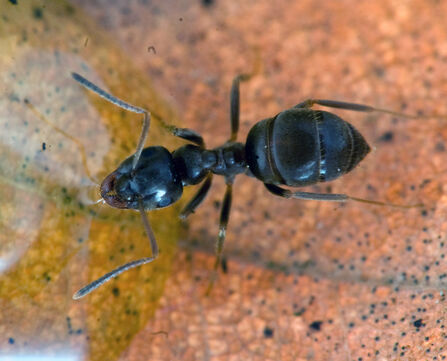
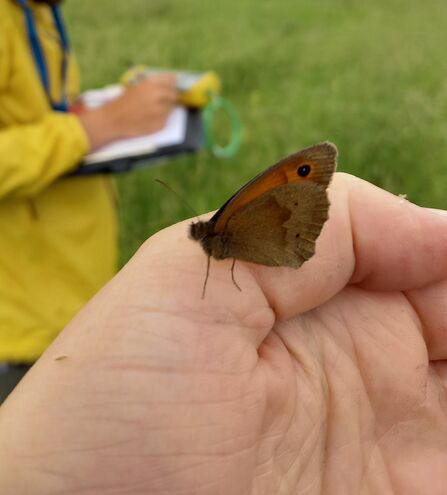
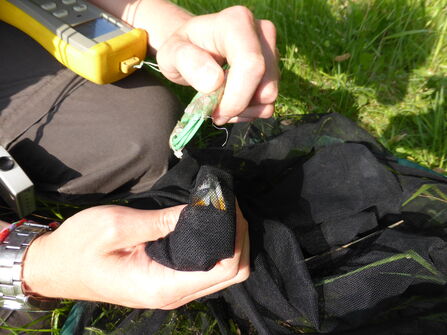
Baseline surveys of butterflies, ground-dwelling invertebrates, plant communities, and air temperature on the banks were conducted before and after they were built, as described in Matt Hayes’ previous blog – Banking on Butterflies - one year on. Every year thereafter, the team has tirelessly conducted butterfly surveys monthly throughout the summer at all butterfly bank sites and monitored ground-dwelling invertebrates using pitfall traps every autumn. With this longer-term data, we can draw conclusions not only about the immediate effect of the banks, but also about how they change over time as plants grow on them and they begin to mature and weather.