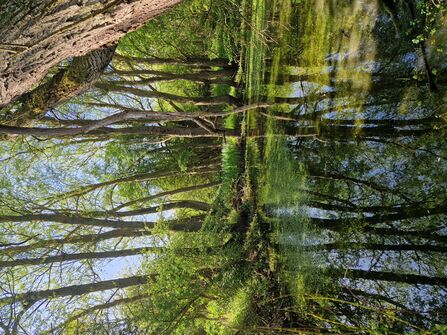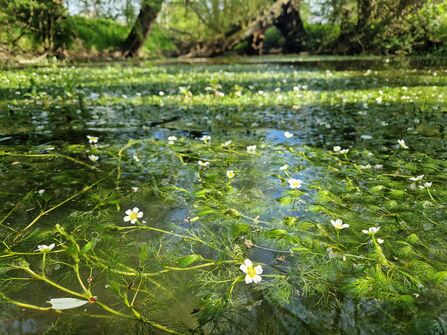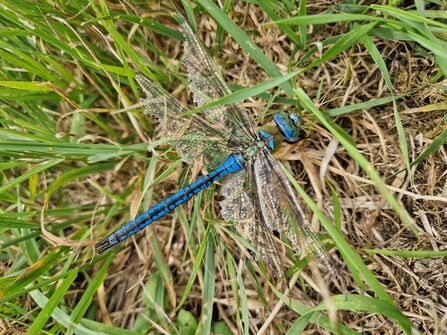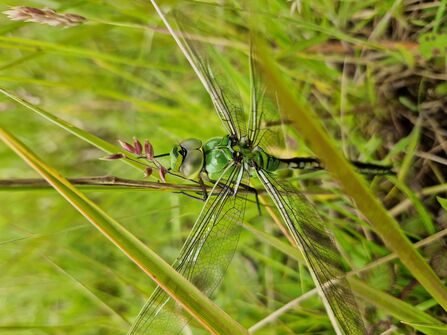

Ponds are marvellous places. They have the wonderous ability to provide a rich habitat for a huge variety of wildlife while also providing an exquisitely beautiful backdrop for all our senses. For many of us ponds provide a tranquil space that ignites our innate curiosity in the natural world. As children we were drawn to them, the temptation to poke sticks into their depths in search of weird and wonderful beasties is relatable well into adulthood. Often, ponds provided the backdrop for some of our first memorable interactions with wildlife. Whether it was pond dipping on a school trip to your local nature reserve or watching in awe as a tiny black dot covered in jelly gradually transformed into a tiny but perfectly formed froglet. Ponds were the vessel that enabled us to connect with nature. They taught us about food webs, lifecycles and the importance of water for all life.
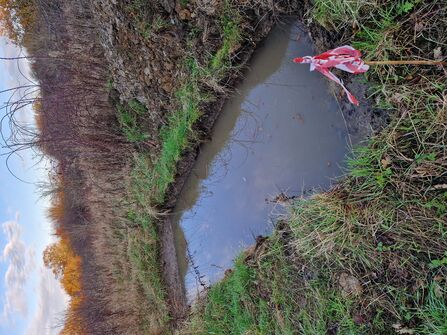
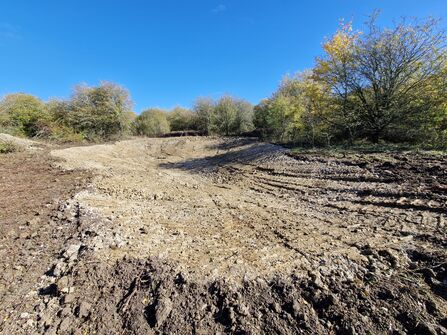
It was always our intention to create new ponds for wildlife at Strawberry Hill. Their ecological benefits within the landscape often far exceed their modest footprint. Freshwater ponds not only provide habitat and drinking water for a myriad of species, including insects, amphibians, birds and mammals. They also help to mitigate against many impacts of climate change – they absorb carbon, aid in flood defence and act as life giving reservoirs in times of drought by replenishing groundwater stores and providing drinking water for thirsty animals. So, when representatives from the Newt Conservation Partnership got in touch with us to discuss a collaborative pond creation project on our land, we were curious to hear what they had to say.
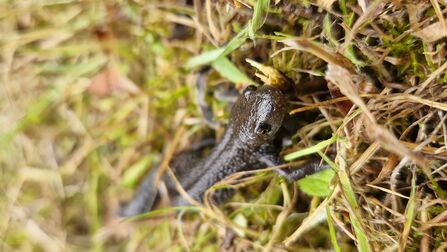
Made up of staff from the Freshwater Habitats Trust and the Amphibian and Reptile Conservation Trust, two leading NGOs, the Newt Conservation Partnership or NCP, is the practical delivery partner for the NatureSpace District Licensing Scheme. Developers pay into this Natural England approved scheme to compensate for their impacts on Great Crested Newts (GCN) and the funds are used for the creation and long-term management of GCN habitat. NCP focuses on delivering new clean water ponds and enhancing the surrounding habitats in places where newts can thrive long term.