
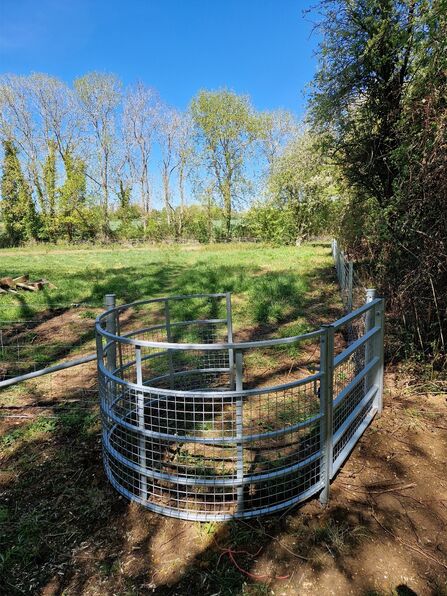
If you are a regular visitor to Felmersham Gravel Pits Nature Reserve in the north of the county, you will no doubt have noticed the installation of our shiny new fencing, gates and cattle corrals. Back in the spring and summer of 2025, I spent some time working closely with our Grants Manager, Andrew Hunter, to develop a funding application pack for new grazing infrastructure at Felmersham. We submitted this to the Biffa Award Nature Recovery Fund –part of the Landfill Communities Fund which is managed by the Royal Society of Wildlife Trusts. You can find out more about Biffa Award here What is Biffa Award? - Biffa Award. Fortunately, our application was successful, and we were awarded just over £50,000 to install brand new cattle grazing infrastructure across the site. So, why Felmersham and why a grazing project in particular? Read on to find out more.
A Face-Lift For Felmersham!

Credit: Chantelle Warriner

Credit: Chantelle Warriner
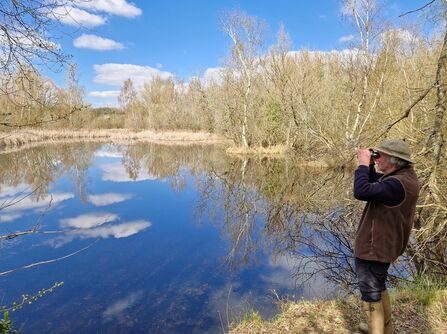
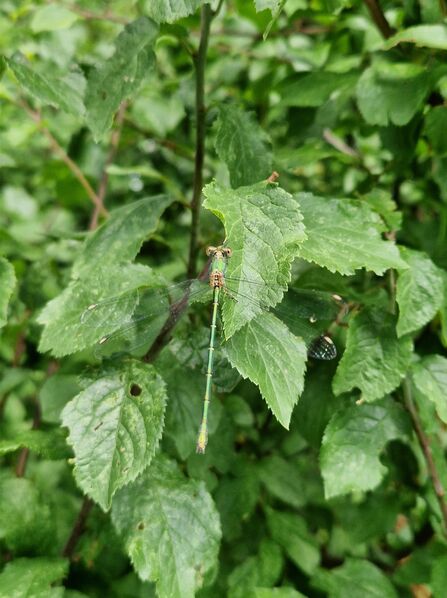
Situated on the floodplain of the Great Ouse, Felmersham Gravel Pits formed after gravel extraction in the 1940s. It has since matured into a rich mosaic of habitats, with tall fen communities surrounding open water, neutral grassland, scrub and broadleaved woodland supporting a very diverse flora and exceptional dragonfly and damselfly (Odonata) fauna. Designated as a Special Site of Scientific Interest in 1969, the site is fundamental to wildlife conservation in the local area. It was the first nature reserve managed by the Wildlife Trust in Bedfordshire and holds special significance to the local conservation community. We therefore felt, it was time to give Felmersham a little bit of care and attention.
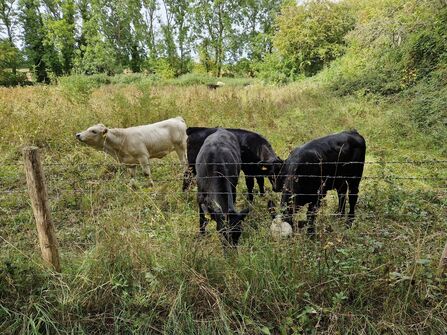
Now don’t get me wrong, Felmersham has been expertly cared for by staff and volunteers of the Wildlife Trust since its lease in 1961 and subsequent purchase in 1975. Most significantly, our Voluntary Warden Cliff Dean has nurtured the nature reserve for over forty years. Cliff, along with the support of a small group of volunteers, regularly holds practical work parties over the winter – typically coppicing aquatic edge habitats to create a mosaic of scrub environments across the site – this rotational coppicing is particularly good for a myriad of nesting bird species present on site such as the chiffchaff, reed bunting, sedge and willow warblers. However, despite Cliff’s best intentions, he and his team can’t quite match the munching power of our conservation grazers – cows!

Credit: Chantelle Warriner
Cattle serve as excellent ecosystem or ‘bioengineers’ helping to maintain biodiversity in scrub and grassland ecosystems in ways we can’t hope to replicate by mechanical means. Cattle are living munching and trampling machines; they selectively graze grasses and herbs and browse scrubby vegetation leaving bare ground and a range of sward heights in their wake. This patchwork of microhabitats, multiple places within a habitat with different physical characteristics, supports far greater biodiversity than habitats managed by mechanical means alone. It is also worth noting that we are subscribed to a Higher-Level Stewardship agreement with Natural England which aims to maintain species -rich, semi natural grassland at Felmersham, and as such we are required to manage the site by grazing with cattle at some time between late summer to the early autumn. This kind of agreement provides us with vital funds for the maintenance of our nature reserves.
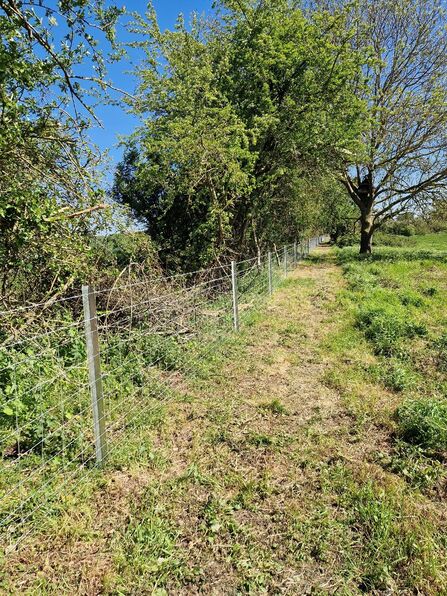
To safely and efficiently graze with cattle we must have a stock proof boundary present around our grazed grassland features. Historically, our grazing compartments have been fenced with traditional wooden chestnut posts. However, a combination of the quality of previous fencing stock, short life span of untreated chestnut posts and the wet nature of the site means that wooden posts regularly fail on site and require constant maintenance and replacement. So, to save poor Cliff from the annual pre-cattle fence post trials (he is approaching a very significant birthday this year, so it feels like the right time to unburden him) we decided to install state of the art Clipex© fencing. Clipex© fencing offers several benefits, including faster installation, increased strength, and potential cost savings over traditional fencing methods. It's designed for durability and longevity, with a lifespan of 30 years or more. So, while the initial installation may look a little harsh, this new, durable fencing will soon soften into the landscape at Felmersham Gravel Pits and serve as a long-lasting solution to our cattle grazing needs on site.
Credit: Chantelle Warriner
Credit: Chantelle Warriner
Credit: Chantelle Warriner
Credit: Chantelle Warriner
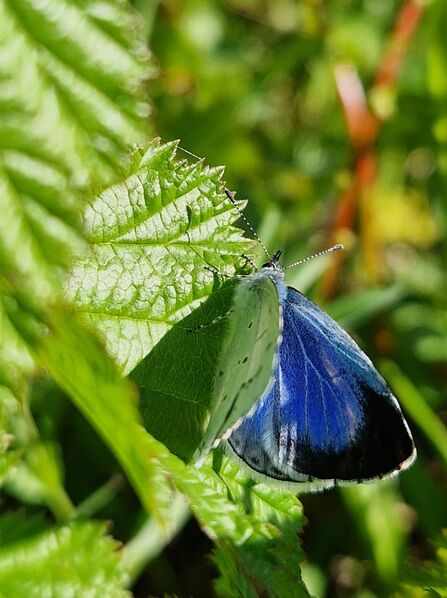
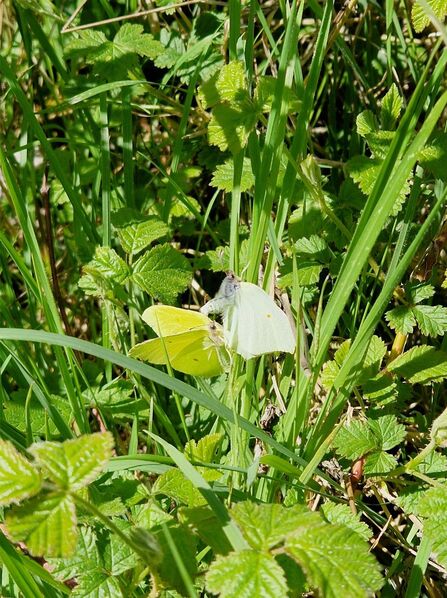
The summer is a great time to explore Felmersham Gravel Pits Nature Reserve. From June to September the reserve is alive with colourful displays of wildflowers and butterflies, and its fabulous birdlife is busy tending to broods of chicks. It is also the perfect time to witness the outstanding assortment of dragonflies and damselflies that reside in and around the gravel pits. So, please do get out and explore this wonderful reserve and send us comments and photos of your wild wanderings this summer.
Credit: Chantelle Warriner
Credit: Chantelle Warriner
Credit: Chantelle Warriner
More like this
Wild About Autumn: Ways to explore and enjoy Bedfordshire’s Wilder Places
Autumn is here, and with it comes another season of exciting opportunities to get involved. Whether you would like to join a walk or…
Bedfordshire Reserves
A summary of what's been happening on Bedfordshire reserves by Aidan Matthews, Senior Reserves Manager
Bedfordshire Reserves
Aidan Matthews (Senior Reserves Officer, Beds) gives an update on Bedfordshire reserves


