Mark Ricketts, Reserves Manager, East Cambs
Fleam Dyke
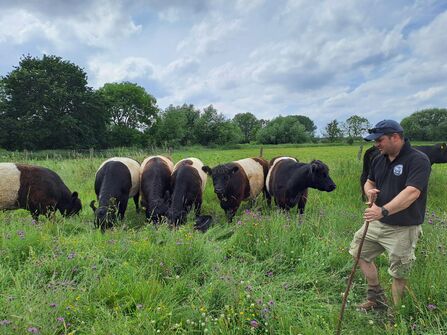
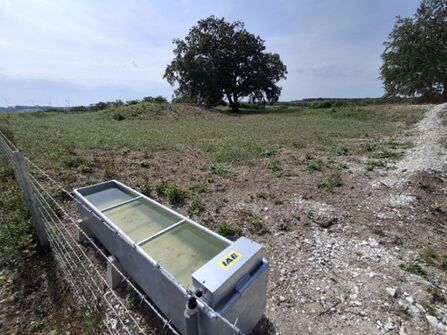
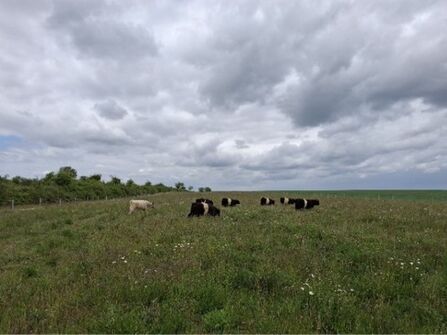
After a new water pipeline and water troughs being installed at Fleam Dyke, we have finally welcomed our first grazing animals on the site.

Mark Ricketts, Reserves Manager, East Cambs
Fleam Dyke
After a new water pipeline and water troughs being installed at Fleam Dyke, we have finally welcomed our first grazing animals on the site.
Fencing
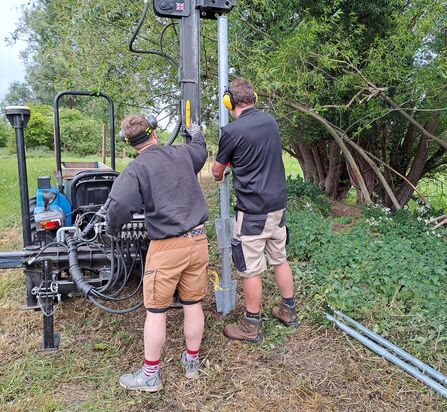
In total this year we have knocked in nearly 200 wooden posts across 5 sites to keep our livestock fencing maintained, this doesn’t include the sections that have been completely replaced by the new Clipex fencing. This transition to metal fencing means that we will hopefully start to gradually reduce the number of repairs we have to do each year, so just we can keep our sites grazed.
Our Alpine tractor and post knocker is very handy for working in small, awkward or wet sites where bigger machinery can struggle or churn up the ground. This Spring it has been across Cambridgeshire, as well as travelling over to Bedfordshire at Flitwick, where the ground is too soft for their much larger tractor and post knocker.

Botanical Surveys - Rapid Grassland Assessment and NVC
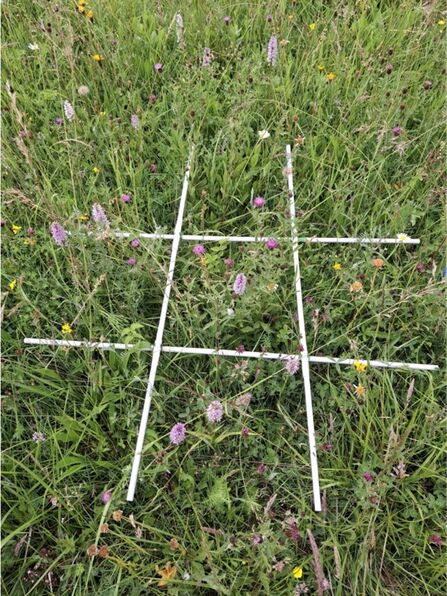
Reserve staff have joined other conservation staff to carry out several rapid grassland botanical surveys in June. Botanical consultants have also been employed to do much more in depth National Vegetation Classification (NVC) surveys, which are repeated over a longer timeframe. Both help to build a picture of the condition and quality of our sites and help us to monitor any significant changes.
Woodland mowing
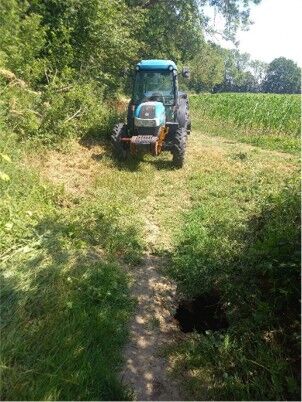
We have just finished our woodland mowing for the year; we have shifted to mowing a little earlier in the year with the aim that some of the flowering plants will have time to grow again, and provide nectar sources later into the year.
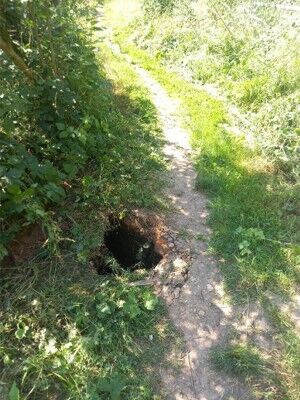
Whilst mowing we usually expect the odd pitfall, but we didn’t expect a literal one. When driving the tractor over a culvert in Waresley we turned around to see that a section of the culvert had collapsed behind us leaving a sizable hole where we had been moments before. The hole is covered over now, and we are planning our repairs to it in the near future.
Waresley ride
After two years of being closed to the public, the most recently reprofiled section of the main ride has been reopened and mown. This reprofiled section looks much better than it used to and seems to be functioning well to drain off the water during the wet months, and the ride side flora is spreading well over it.
There is the odd patch of rougher plants that you would expect from having disturbed ground, but with a few more years of mowing, they should be kept well in check.

Rebecca Green, Senior Ranger, Trumpington Meadows
Jenny Smith, Ranger, Trumpington Meadows & Cambs
Trumpington Meadows
We set up a second transect for monitoring butterflies at the reserve this year (as reported in the last e-news) and it’s been a busy summer for the volunteers with lots of migratory painted ladies and clouded yellows seen, as well as hummingbird hawkmoths. Common and holly blues, as well as brown argus, are also being seen in good numbers, but small blues have not had such a good year, possibly to do with emergence timings and weather. Butterflies are fantastic indicator species and monitoring them gives us feedback on our management.
We celebrated 10 years since the opening of the Nature Reserve to the public with an event organised by the Trumpington Parish and community. The event was a real success with lots of people attending. We ran two popular cow safaris where we transported people to the south of the reserve in our people trailer to see our Belted Galloway herd, and have a chat to farmer Ed about conservation grazing. Becca Neal kept families entertained with wildlife activities and crafts.
Some of the site infrastructure is starting to show its age now and the timber fence posts in particular will all need replacing over the next few years. In common with many other Trust sites, we have opted to use metal fence posts, to give better longevity and hopefully cost effectiveness over the long term. We replaced 200m this spring, which was a great start.
Late July and August is hay cutting season, with the larger areas being cut by a local farmer, and Trust staff and volunteers doing the smaller, trickier and later areas. Different patches are flagged off each year to be left as overwintering habitat. Like everywhere, the reserve is suffering in the drought – there is little still flowering and providing nectar for pollinating insects, and the number of bales and quality of hay is low. We are hoping for rain soon to try and encourage a bit of regrowth in the meadows.
Cherry Hinton Chalk Pits
In April we had the sad news that the female peregrine in East Pit had died. The full reasons why are not yet clear, but we were very grateful to the local Cambridge Peregrine Group for keeping an eye on the avian goings on at the pit, it has been quite the soap opera! We hope that a new pair will form and take up the opportunity to use the site next year.
We have been working with Cambridge City Council staff on the hand back of Lime Kiln Close to their care. Our volunteers will continue to work on the site to ensure it gets the management needed. The volunteer work party will be back in East Pit in the autumn, please email jenny.smith@wildlifebcn.org if you are interested in joining in the fun.
Eamonn Lawlor, Senior Reserves Officer, West Cambs
Southorpe Meadow
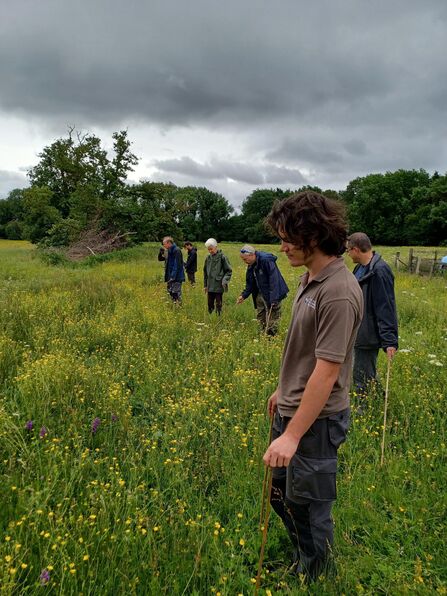
Our annual survey of orchids at Southorpe Meadow took place June 3rd. Common Spotted, Southern Marsh, Pyramidal, Bee, and Green Winged Orchids all made an appearance. There are quite a few hybrids to be seen as well.
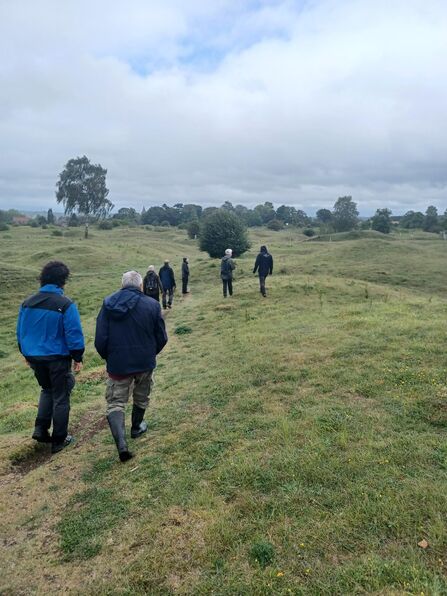
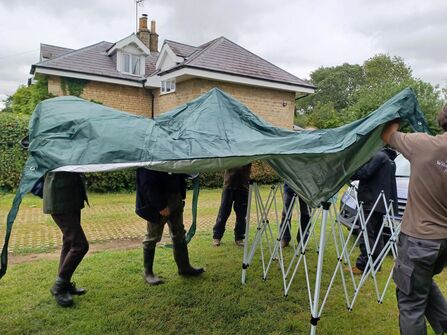
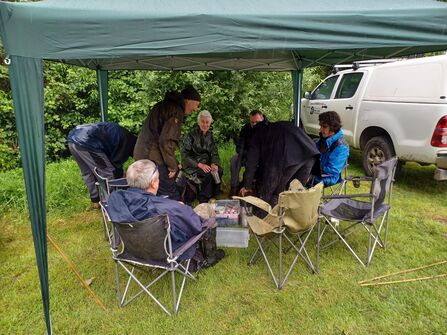
With the help of our Peterborough Volunteers, we counted 4708 orchids overall. The day was quite wet but our new gazebo proved useful and helped keep moods high. Later in the afternoon, the group went to visit Barnack Hills and Holes National Nature Reserve a little further up the road. Managed by Natural England, it’s fantastic site to see something different and interesting. We try to fit in one or two days a year with our volunteers to just have some fun. Link: Barnack Hills and Holes NNR - COLL01
Woodston Ponds
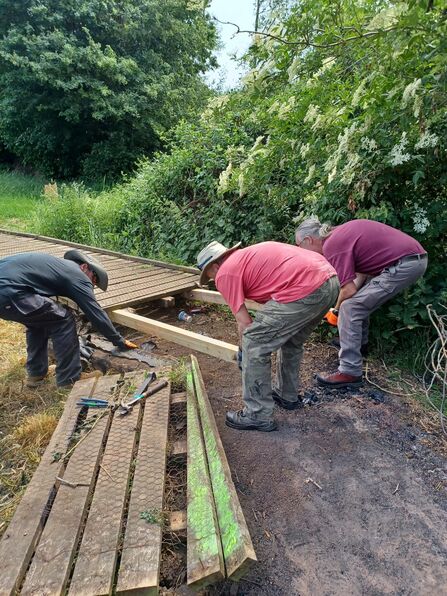
We have a great crew of volunteers at Peterborough who love building and repairing things. In addition to the ongoing maintenance to the boardwalk at Woodston Ponds, we had a section set ablaze this June. So, our volunteers were out with us quickly to do some patch-up repairs. The boardwalk is very long and wooden. Keeping up with the rate at which repairs are needed has been challenging. This year, we’ll begin reducing the overall length of the boardwalk but without compromising visitor’s ability to access the site. This will mean we have less to maintain going forward and instead, we can focus our limited resources on a shorter section.
Wansford Pasture
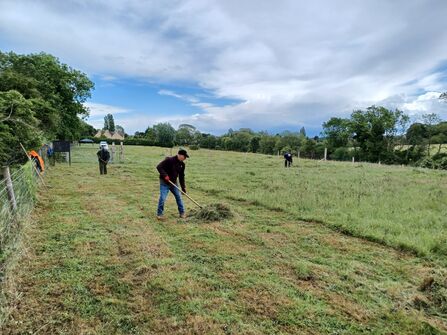
Early season ‘headland’ cuts, often employed along the edges of fields where nutrient levels build up in the soils, helps to reduce the dominance of taller ruderal plant species. Removing the cuttings helps more favourable species to grow there instead. Thistles, Hogweed, taller grasses once established then can then spread further into field if not kept in-check. So, this summer, we had our volunteers helping to rake up cuttings at Wansford Pasture, Upwood Meadows and Southorpe Meadow.
Toby Carroll is a young Voluntary Reserves Officer who joined the West Cambs Reserves Team back in November 2025. He will be leaving at the end of August to fill a placement with the Forestry Commission working with rangers at Thetford Forest. He reflects on his 9 months at the Wildlife Trust.
"I have thoroughly enjoyed my time as a VRO. It has been an unmissable opportunity to gain real experience in the sector and to understand the wider effort around managing nature reserves.
I have particularly enjoyed the practical side of it, learning hands-on habitat management for a variety of wildlife across several different landscapes including woodlands, wetlands and meadows. It was really fun and interesting learning about different tools, many of which I hadn’t heard of before (such as fencing pliers!) and how to use them safely and effectively, with the crowning jewel of course being the certificates in chainsaws and brushcutters! It has been really rewarding returning to nature reserves and seeing where I’d been, whether that be a repaired boardwalk, laid scrub, a repaired fence or cut grass, it is uplifting to see where I had made my mark. It has also been fun learning to identify a plethora of wildlife ranging from plants to birds to mammals and it has given me a greater appreciation for the natural world.
Beyond the reserves it has also been interesting learning about the theory side of managing nature reserves, such as learning about work and machinery logs, management plans and commitments to designations such as SSSI, or prioritising tasks across 20+ reserves that the West Cambs team manage, being exposed to the behind the scenes of the reserves management has given me a deeper understanding of the sector.
I am immensely happy with how past the nine months with the Wildlife Trust have gone, and look forward to the doors it has opened and future opportunities in my journey into conservation".