Bedfordshire Reserves

Bedfordshire Reserves

A summary of what's been happening on Bedfordshire reserves by Aidan Matthews, Senior Reserves Manager

The last few months seem to have been filled with relentless heat. The nature reserves are now desperate for some serious rain and most of the grassland sites are just brown shrivelled hay that our grazing animals aren’t enjoying. Whilst our early hopes for a settled summer of occasional rain were dashed with prolonged and heavy rainfall, the last couple of months soon saw us wishing for a drop of the wet stuff. 

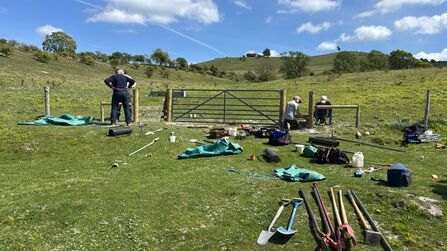
The team have been steadily working around a number of sites replacing rotten fence posts, with over 300 posts installed on a variety of sites. Pegsdon, with its 5+ miles of fencing is always a challenge and the full replacement of two sections with Clipex posts over the winter hasn’t lessened our efforts elsewhere on the site. Blow’s Downs and Totternhoe Quarry are another two sites where the fencing has been tended to, and in some areas of these sites we are almost having to chisel a hole out of the chalky ground before a post can be installed. 

Flitwick Moor is generally an easier site to put posts into and there has been a significant amount of work across the grazed compartments to secure the boundaries in the main grazed areas. The field we manage for Central Beds Council that is to the North East end of the SSSI, near Ruxox Farm, has not had a secure fence for a number of seasons. Following the installation of a cattle bridge that links it to the field we acquired in early 2021, we have embarked on a full replacement of the boundary fence. 
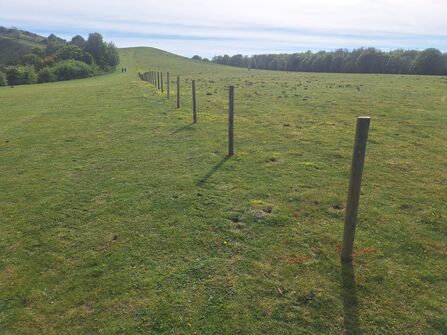
The volunteer team have spent days in the area, firstly removing the old wire and posts, clearing out vegetation and putting in new long posts by hand. Given the soft nature of the ground across much of the field, we were limited in which areas we could use a tractor and post bumper we borrowed from our Cambs colleagues. Numerous sections of the site were either too soft or too crowded with trees to allow the machine in, so our dedicated volunteers were enlisted to drive the posts in by hand. 

The work was not all good clean fun, with biting insects present and making themselves a nuisance and certain sections extremely wet and muddy to transit through. Some of the team literally threw themselves into the task, by donning waders and working up the central channel to remove branches, logs and other obstructions to the water course. The channel carries the overflow from the alkaline River Flit through the site, and the desire is to have this water exit the site rather than back up and swamp the rich areas of acidic peat and fen habitat the moor is renowned for. 

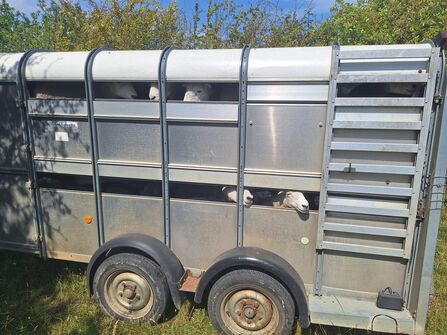
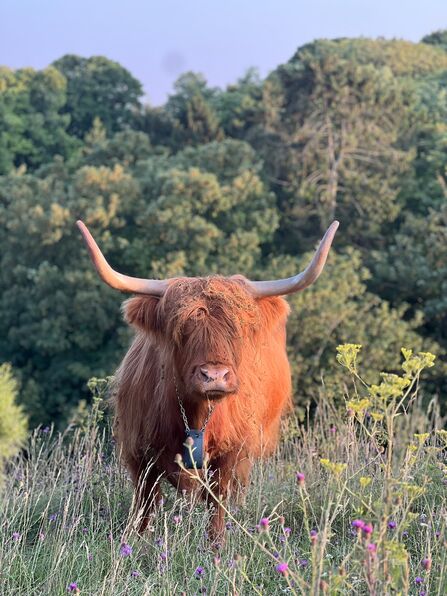
Our livestock have recently been shifted round the county, with sheep heading to Knocking Hoe NNR to graze for Natural England, and then on to Totternhoe Knolls, to graze there for the National Trust. Or Highland cows have been sent to various site, with some heading to Ravensburgh Bank, which is part of the Barton Hills NNR, whilst others have gone to Warden Hills to graze there for Luton Borough Council. We have also sent a couple to Flitwick Moor to tackle some rush and reed growth that is a touch to hard grazing for the redpolls we typically have on site. The sheep that have remained at Pegsdon are just moving into the central SSSI area and are confined to the western slopes of Barn Hole, where they are pushing back the lush growth of early summer. 

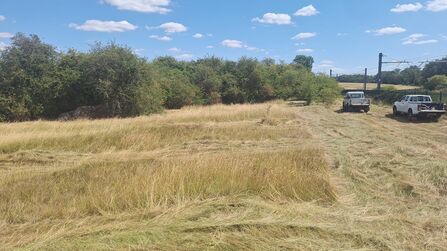
We’ll soon be moving into the main grassland cutting works across the county and a few days have already been spent cutting and raking the rich grassland at Wymington and Sharnbrook in the north of the county. The tractor and mowers will soon be venturing out to Sallowsprings, Cut-Throat Meadow, Totternhoe and Flitwick, to tackle sections where we can’t get grazing completed and we are immensely grateful to the efforts of the volunteer team in completing this vital work. Hopefully it will cool down soon and we get a welcome bit of rain to moisten our parched nature reserves.